
TL;DR

Get garden gear delivered free with Prime
- Fast, free delivery on millions of items
- Prime Video, Amazon Music and more included
- Member-only deals all year
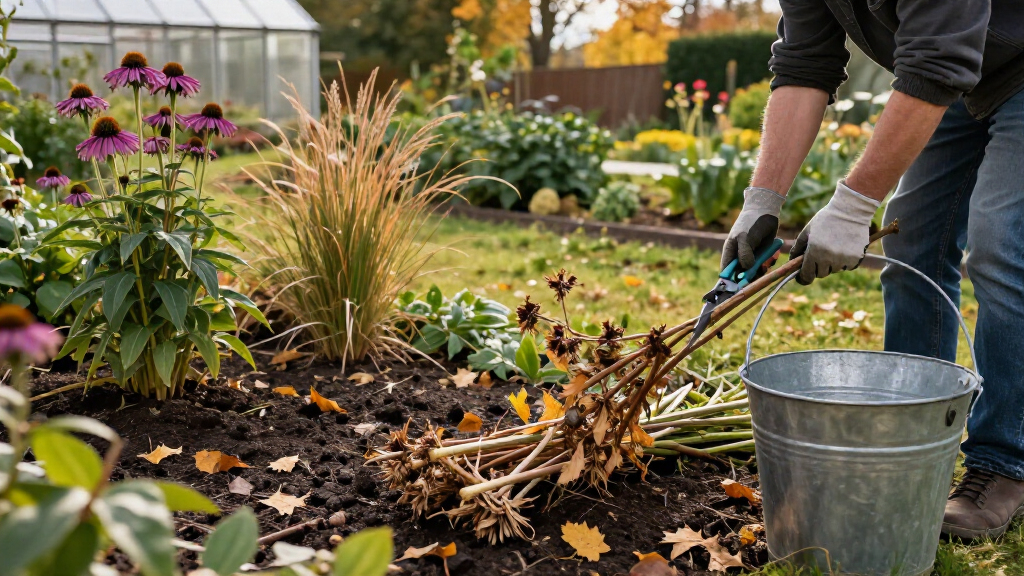
Country Living recommends cutting back 11 perennials after frost or once their foliage has died, including bee balm, hostas, phlox and lilies. The timing and cut height vary by plant; diseased leaves should be discarded rather than composted, and lilies should be left intact until frost kills their foliage.
Country Living has published a list of 11 perennials to cut back in fall, advising gardeners to wait for frost or natural dieback before removing foliage from many plants. The guidance is aimed at tidying beds and, for plants prone to disease or pests, reducing material that could pose problems next season; the recommended timing and cut height differ by species.
The list covers bee balm, hosta, catmint, phlox, iris, daylily, veronica, yarrow, columbine, peony and true lilies. For bee balm and phlox, which the report says are prone to powdery mildew, it recommends removing foliage in fall and not composting diseased material. It gives similar disposal advice for diseased iris and peony leaves.
Some plants have specific cut heights or cautions. Country Living advises cutting hostas to about 2 inches above the soil after frost, when leaves have died and yellowed. Catmint can be cut to about 6 inches; iris foliage can be cut down to the rhizome after frost. For veronica, the report says to avoid cutting into the basal foliage, while yarrow should be cut back to the new basal leaves.
True lilies should not be cut before frost, according to the report, because green foliage continues making food that is stored in the bulb for the following year. Once frost has killed the foliage, it can be trimmed. Daylilies and columbines can be cleared of dead foliage and spent flower stalks after frost, while peonies should be cut back after a couple of frosts.
Timing Cuts Around Frost
The recommendations matter because a fall cleanup is not simply a matter of cutting every perennial to the ground. Removing foliage too early can interfere with a lily’s food storage, while cutting too low on veronica can damage late-season basal growth. Waiting for frost provides a practical signal for several plants, but the source gives different timing for different species.
Sanitation is another reason given for the work. The report links removal of diseased bee balm, phlox, iris and peony foliage with lowering the chance of disease carrying over. It also says dead hosta leaves may shelter slug eggs and voles. These are the article’s gardening recommendations; outcomes will depend on local conditions and plant health.
As an affiliate, we earn on qualifying purchases.
Why the Cutback List Varies
Perennials do not all respond to fall pruning in the same way. Some, such as true lilies, need their foliage to die back naturally before it is removed, while other plants on the list are described as candidates for cleanup after frost. The report also distinguishes between removing all foliage and cutting to a particular point, such as the iris rhizome or yarrow’s new basal leaves.
The list is based on Country Living’s gardening report and focuses on these 11 plants. It does not provide a regional calendar, climate zone guidance or a broader rule for every perennial. Gardeners should use the plant-specific directions rather than assume one date or cut height applies across the garden.
““Don’t compost diseased plants.””
— Country Living
As an affiliate, we earn on qualifying purchases.
Local Timing Still Depends on Frost
The source does not specify publication timing, regional climate guidance or exact frost dates, so it does not establish a single calendar date for the work. It also does not quantify how much the suggested cleanup changes disease or pest levels the following year. Recommendations are presented as general gardening guidance, not as guarantees of plant health.
For several plants, the instruction is tied to a frost or visible dieback rather than a fixed schedule. Local weather and the condition of an individual plant may affect when those signs occur.
disease-resistant perennial plants
As an affiliate, we earn on qualifying purchases.
As an affiliate, we earn on qualifying purchases.
Use Frost as the Garden Cue
Gardeners following the list should first identify which perennials are present, then check each plant’s instruction as frost arrives. Leave lily foliage until it has died, preserve veronica’s basal growth and discard diseased leaves rather than placing them in compost. The report does not announce a follow-up study or further guidance; the next step is applying the recommendations according to local conditions.
As an affiliate, we earn on qualifying purchases.
Key Questions
Which perennials does the fall cutback list include?
Country Living lists bee balm, hosta, catmint, phlox, iris, daylily, veronica, yarrow, columbine, peony and true lilies.
Should all 11 plants be cut back at the same time?
No. The report ties many cutbacks to the first frost or natural dieback, but gives plant-specific instructions. True lilies should be left until frost has killed the foliage, while peonies are cut back after a couple of frosts.
Which cuttings should not go in the compost?
The report says to discard diseased foliage, including affected bee balm, phlox, iris and peony leaves, rather than composting it.
How short should hostas be cut?
After frost, once the leaves have died and become yellow, Country Living recommends cutting hostas to about 2 inches above the soil.
Why wait to cut back true lilies?
Green lily foliage continues producing food that is stored in the bulb for the next year’s blooms. The report says to trim the plant only after frost has killed the foliage.
Source: rss
Halloween Picks
halloween
As an affiliate, we earn on qualifying purchases.