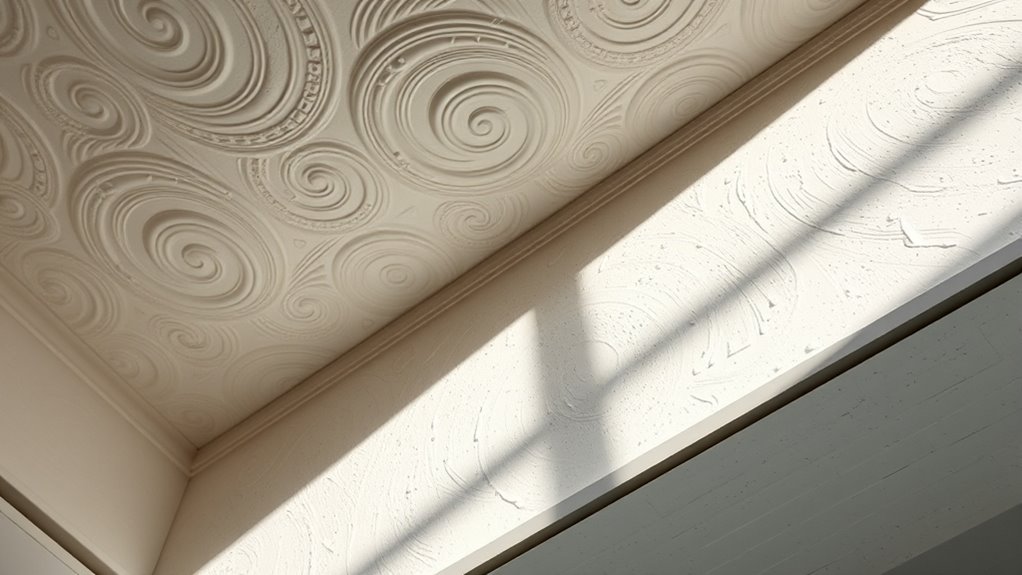

Adding textured walls and ceilings can instantly give your interiors depth and character. By choosing techniques like sponging, stippling, or rag rolling, you create visual interest and hide imperfections. Subtle textures enhance lighting effects, while bold patterns add drama. Modern trends favor refined finishes like knockdown or skip trowel styles that complement your style seamlessly. Exploring these options will reveal how textured surfaces can transform your space into a more inviting, dynamic environment.
Key Takeaways
- Textured walls and ceilings add visual depth and character, making interior spaces more engaging and personalized.
- Various techniques like sponging, stippling, and rag rolling create unique textures that enhance room aesthetics.
- Subtle textures such as knockdown or skip trowel finishes provide a refined look that complements modern design trends.
- Proper priming and tool selection are essential for achieving consistent, appealing textures and hiding surface imperfections.
- Textured finishes foster a tactile experience and play with lighting to cast attractive shadows, enriching the room’s ambiance.
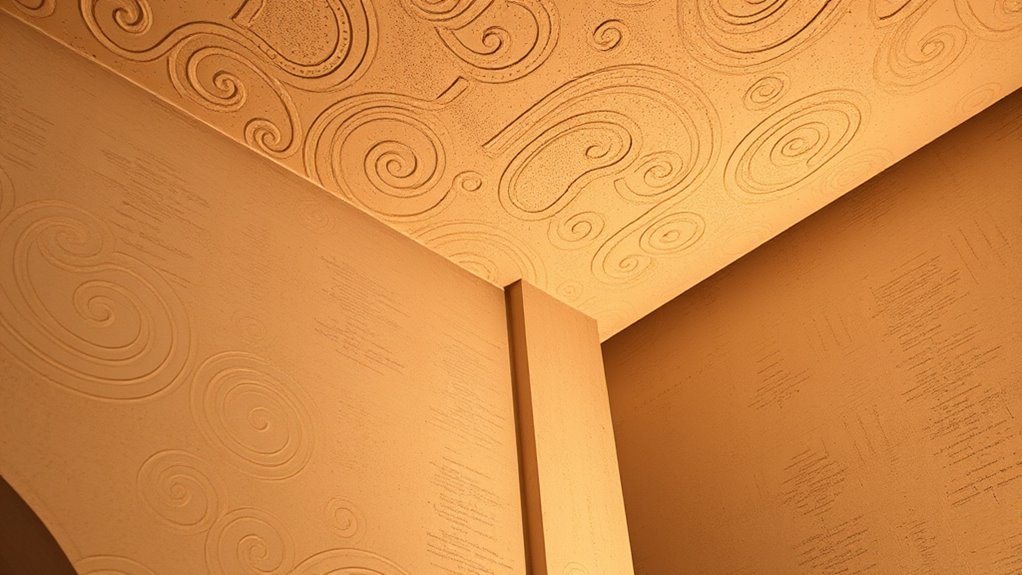
Textured walls and ceilings add depth and character to any space, giving your home a unique, finished look. When you consider upgrading your interiors, exploring wall paint techniques can dramatically enhance the visual appeal. Techniques like sponging, rag rolling, or stippling add dimension and complexity, transforming flat surfaces into works of art. For example, a sponge technique with subtle color variations can create an understated elegance, while more dramatic stippling can add bold texture. These methods allow you to customize your decor, making each room feel more inviting and personalized.
Textured walls and ceilings create depth, character, and personalized elegance in any space.
Ceiling design trends are also shifting, emphasizing textures that blend style with function. Modern trends favor subtle textures that don’t overwhelm but instead complement the overall aesthetic. For instance, popcorn ceilings are giving way to more refined options such as knockdown or skip trowel finishes, which add just enough texture to break the monotony of plain ceilings. These trends focus on creating visual interest without sacrificing a clean, contemporary look. You can choose textured finishes that mimic natural materials like plaster or stucco, adding warmth and depth to a room. By staying current with ceiling design trends, you ensure your space remains stylish and fresh.
When applying wall paint techniques, preparation is key. Properly priming your walls ensures the paint adheres smoothly and that the texture you create remains consistent. Using different tools, like sponges, brushes, or rollers, allows you to experiment with various effects, giving each wall a distinct personality. Remember, the goal is to add depth without cluttering the space; subtle variations often work best. Similarly, with ceilings, consider how the texture interacts with lighting. A well-chosen pattern can cast shadows that add an extra layer of visual interest, especially in rooms with good natural or artificial lighting. Additionally, understanding contrast ratio can help you select textures and finishes that enhance the overall ambiance.
Incorporating these textured elements isn’t just about aesthetics—it’s also about creating a tactile experience. You want your walls and ceilings to invite touch and curiosity, making your home feel more dynamic. Whether you prefer a rough stucco finish or a smooth, subtle stipple, these textures can hide imperfections and add an element of artistry. As you explore the latest ceiling design trends, keep in mind that simplicity often pairs best with textured finishes, ensuring your space feels balanced and cohesive. Overall, embracing textured walls and ceilings lets you craft a space that’s both stylish and uniquely yours, full of depth and personality.
Frequently Asked Questions
How Long Does Textured Wall Installation Typically Take?
The installation timeline for textured walls usually takes about 1 to 3 days, depending on the size of your space and the complexity of the texture. Your choice of material selection influences this timeframe, as some textures require more drying or curing time. You’ll want to coordinate with your contractor to ensure proper preparation and application, so the process fits smoothly into your schedule.
Are Textured Ceilings Suitable for Humid Environments?
Yes, textured ceilings can be suitable for humid environments if you choose moisture-resistant materials. Look for finishes designed to handle moisture, which can help prevent mold and damage. However, keep in mind that textured surfaces may present maintenance challenges, as they can trap dust and require more effort to clean. Regular upkeep and selecting the right moisture-resistant textures will keep your ceiling looking great and functional.
Can Textured Walls Be Painted Over Easily?
Think of textured walls like a canvas waiting for a new story—you can paint over them easily if you prepare the surface properly. To do so, you’ll need to carefully remove any loose paint and ensure smooth surface preparation. This process makes repainting straightforward, just like giving a worn-out painting a fresh coat. With patience, your textured walls can be transformed into a sleek, new look, brightening your space effortlessly.
What Are the Best Cleaning Methods for Textured Surfaces?
To keep textured surfaces clean, use gentle cleaning techniques like dusting with a soft brush or vacuuming with a brush attachment. For stains or grime, mix mild soap with water and gently wipe using a soft cloth or sponge, avoiding excessive scrubbing that could damage the texture. Regular surface maintenance prevents buildup, preserves the texture’s appearance, and keeps your walls looking fresh. Always test cleaning methods on a small area first.
Is There a Way to Repair Damaged Textured Finishes?
Yes, you can repair damaged textured finishes using simple repair techniques. First, clean the area to remove dirt and loose material. For minor damage, apply a matching textured compound with a putty knife, then recreate the original texture using a sponge, brush, or roller. For larger repairs, consider reapplying the texture over the patch. Proper texture maintenance guarantees your surfaces stay attractive and seamless.
Conclusion
By adding textured walls and ceilings, you create depth, add character, and bring personality to your home. You embrace variety, enjoy visual interest, and showcase your style. You highlight contrast, emphasize details, and make your space uniquely yours. With textured surfaces, you invite warmth, foster coziness, and inspire creativity. So, take the plunge, experiment boldly, and transform your interiors into a stunning reflection of your taste and imagination.