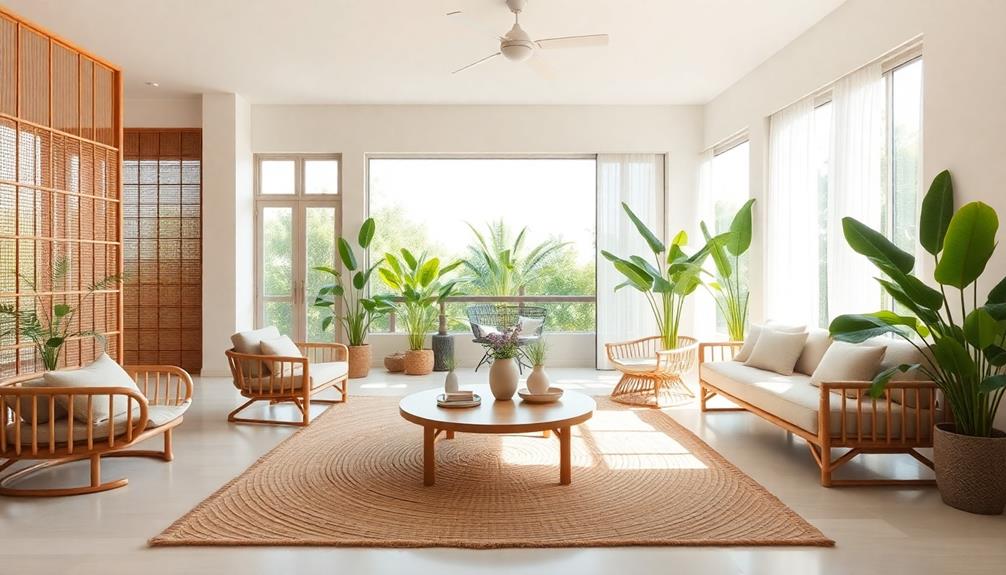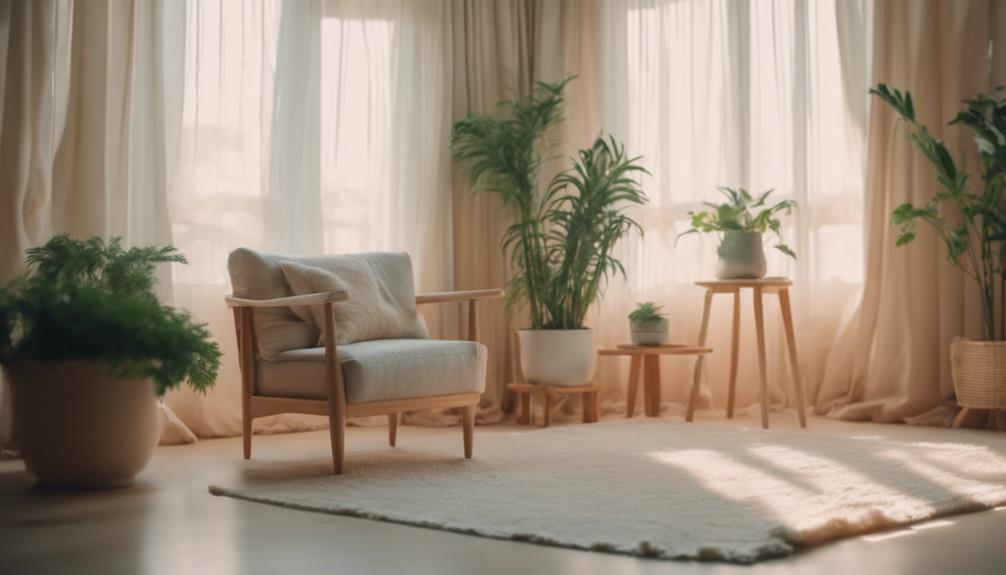
Modular design lets you create reconfigurable rooms and furniture that adapt to your changing needs. You can easily move, add, or remove flexible partitions and components without requiring expert skills or major renovations. This approach maximizes space, boosts versatility, and encourages creativity in customizing your environment. Plus, it promotes sustainability through reusable parts. To discover how you can transform your space effortlessly, continue exploring the many ways modular design can work for you.
Key Takeaways
- Modular design uses interchangeable components to easily reconfigure rooms and furniture for different needs.
- Flexible partitions and storage units allow quick space adjustments without major renovations.
- Simplified customization enables users to personalize environments and adapt them over time.
- Reusable, eco-friendly modules promote sustainability by reducing waste and extending product lifespan.
- The approach encourages experimentation with layouts, enhancing versatility and functional adaptability.
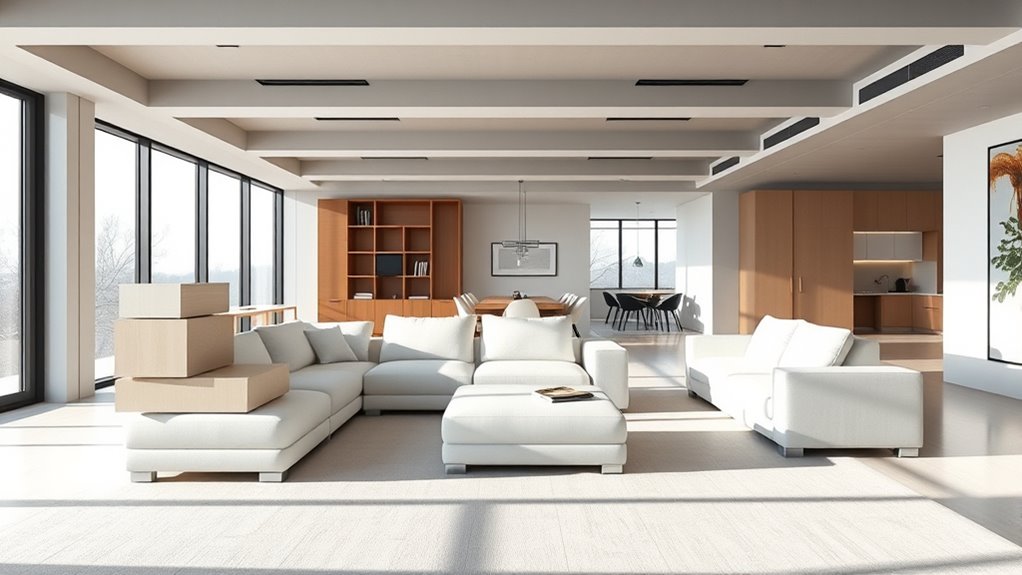
Have you ever wondered how complex products can be built more efficiently and flexibly? Modular design makes this possible by breaking down large structures into smaller, interchangeable components. Imagine creating a room or furniture piece that can easily change shape or function to suit your needs. That’s the core idea behind modular design. It leverages flexible partitions that can be moved, added, or removed, allowing you to reconfigure spaces quickly without the hassle of tearing down walls or buying entirely new furniture. These partitions act as the building blocks of your environment, giving you control over how your space evolves. Whether you want a private nook for work or an open area for entertaining, flexible partitions make it simple to adapt your surroundings on the fly. This approach also extends to storage solutions. Adaptable storage units can be customized to fit varying needs and spaces, making them ideal for homes or offices that require constant change. Instead of fixed cabinets or shelves, modular storage pieces can be stacked, expanded, or rearranged with ease, ensuring you make the most of every inch. The beauty of this system lies in its simplicity and versatility. You don’t need expert skills to modify your environment—just pick the right modules, and you’re set. It’s perfect for those who value flexibility and want to avoid the constraints of traditional design. Plus, modular design supports sustainability. Since components are reusable and replaceable, you reduce waste and extend the lifespan of your furniture and partitions. This eco-friendly aspect is increasingly important in today’s world. Additionally, incorporating highly customizable elements allows for even greater adaptability to changing needs. Rapid adjustments save you time and money. Instead of undertaking extensive renovations or purchasing entirely new pieces, you can simply reconfigure what you already have. Whether you’re living in a small apartment, managing a dynamic workspace, or designing a multi-purpose room, modular design offers the adaptability you need. It encourages creativity and experimentation, letting you explore new layouts without long-term commitments. Over time, your space can evolve alongside your changing lifestyle. With flexible partitions and adaptable storage, you gain the freedom to personalize your environment whenever you want, making your space truly yours. This approach not only simplifies life but also enhances functionality, giving you a flexible, efficient, and sustainable way to design your surroundings. Fundamentally, modular design empowers you to create a space that can grow and change with you, making every square foot work harder for your needs.
Frequently Asked Questions
How Durable Are Modular Furniture Pieces Over Time?
Modular furniture is quite durable over time, especially if made from high-quality materials. You’ll find that their material longevity guarantees they stay in good shape, even with regular reconfigurations. Wear resistance is key, so you won’t need to worry about scratches or dents easily. With proper care, these pieces can last for years, maintaining both their functionality and appearance, making them a smart investment for flexible spaces.
Can Modular Rooms Be Easily Expanded or Contracted?
You can effortlessly expand or contract your space with modular rooms—it’s like having a magic wand for your home! Thanks to expandable layouts and flexible configurations, you just slide, fold, or reposition panels and furniture to suit your needs. Whether you want a bigger space for guests or a cozy nook, these rooms adapt instantly. You’ll love how simple, quick, and transformative the process is, making your environment perfectly versatile.
What Are the Cost Differences Between Modular and Traditional Designs?
You find that modular designs often have higher initial costs due to specialized components and flexible features. However, a thorough cost analysis shows they can save you money long-term by reducing renovation expenses and enabling easy reconfiguration. When considering your budget, weigh these ongoing savings against upfront costs. Modular setups offer adaptability that might fit your financial plan better, especially if you anticipate future space changes or expansions.
Are Modular Systems Environmentally Sustainable?
Yes, modular systems are environmentally sustainable because you use eco-friendly materials that reduce waste and promote recyclability. They also enhance energy efficiency by allowing you to reconfigure spaces easily, optimizing natural light and ventilation. When you choose modular designs, you’re actively reducing your carbon footprint, conserving resources, and supporting sustainable practices. This flexibility not only benefits the environment but also helps you adapt spaces over time without unnecessary demolition or waste.
How Do Modular Designs Impact Interior Acoustics?
Modular designs enhance interior acoustics by providing acoustic flexibility, allowing you to adjust spaces for better sound control. You can incorporate sound-absorbing panels or partitions to improve noise insulation where needed. Reconfigurable furniture and room layouts help manage sound levels effectively, reducing echo and background noise. This adaptability allows you to customize your environment for ideal comfort, making your space more functional and acoustically balanced.
Conclusion
Embracing modular design means you can adapt your space as easily as changing your mind. With reconfigurable rooms and furniture, you’re not stuck in a rut—you can keep things fresh and functional. It’s a win-win that lets you make the most of your environment without breaking the bank. Remember, when it comes to your space, flexibility is the name of the game. So, why not seize the opportunity and let your space work for you?