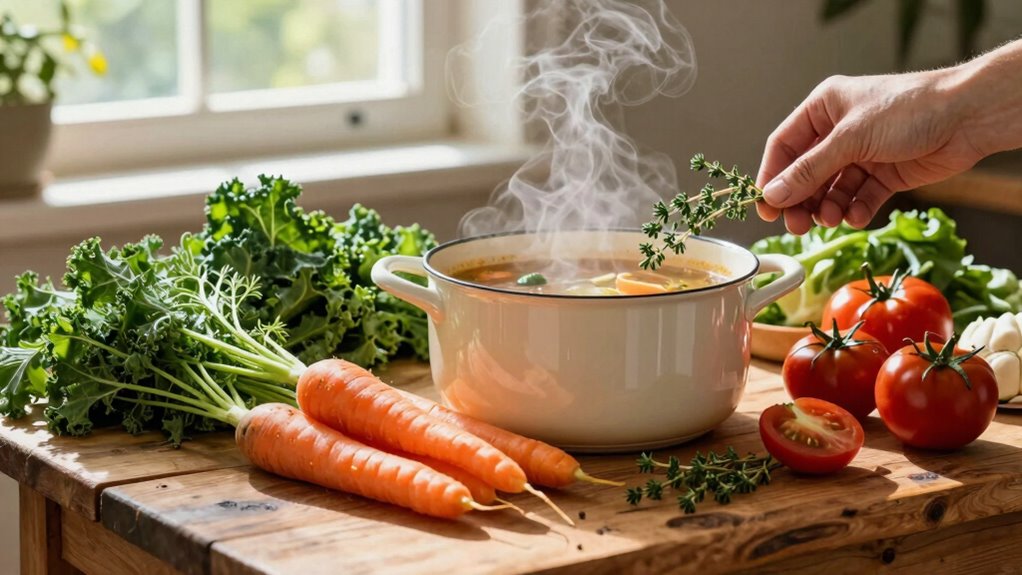

Seasonal cooking feels more grounding because it connects you to nature’s natural cycles and local ingredients. You’re encouraged to slow down, appreciate subtle flavors, and honor the rhythm of the land. Unlike trend cooking, which often relies on fleeting ingredients and flashy techniques, seasonal dishes support sustainability and deepen your sensory awareness. By embracing seasons, you nurture a mindful relationship with food and the environment, and there’s much more to uncover if you keep exploring.

Get garden gear delivered free — and shop member deals
- Fast, free delivery on millions of items
- Access to Prime Big Deal Days deals on October 6–7
- Prime Video, Amazon Music and more included
Key Takeaways
- Seasonal cooking aligns with natural cycles, fostering mindfulness and a deeper connection to the environment.
- It emphasizes local ingredients, supporting community and sustainability over fleeting trend ingredients.
- Preserving seasonal flavors through techniques like canning and freezing maintains a meaningful link to harvest times.
- It encourages slowing down and appreciating subtle taste, aroma, and texture differences rooted in nature.
- Focusing on tradition and natural rhythms creates a more authentic, satisfying culinary experience than trendy, fleeting techniques.

Have you ever noticed how the flavors of your favorite dishes change with the seasons? It’s like nature itself influences what ends up on your plate. Seasonal cooking connects you to the natural rhythm of the year, making each meal feel more meaningful and grounded. When you cook with what’s in season, you tap into a freshness that’s hard to match with trend-driven ingredients or exotic imports. This approach often leads you to embrace the farm to table movement, where you source ingredients directly from local farms. Not only does this support community farmers, but it also guarantees that your produce is at its peak flavor and nutritional value. This direct link to local sources makes your cooking more authentic and rooted in the environment around you.
Using preserving techniques, you can extend the joys of seasonal eating even when certain ingredients are out of season. Canning, freezing, and drying allow you to capture the flavors of summer berries or autumn apples, so you can enjoy their taste year-round. These techniques aren’t just about convenience—they’re about maintaining a connection to the seasons. When you preserve, you’re actively participating in the natural cycle, aligning your culinary habits with the ebb and flow of harvest times. It’s a way to honor the seasonal bounty and keep it alive in your kitchen long after the harvest is over. Incorporating preservation techniques can also help you reduce food waste and make your kitchen more sustainable. Exploring different preservation methods can further deepen your understanding of seasonal cycles and how to best capture their flavors. Additionally, learning about food safety is essential to ensure your preserved foods remain safe and delicious over time.
Unlike trend cooking, which often relies on fleeting ingredients or flashy techniques, seasonal cooking invites you to slow down and appreciate the natural progression of flavors. It’s about listening to your local environment and choosing ingredients that grow and mature in harmony with the seasons. This approach makes cooking feel less like a race to keep up with the latest culinary fads and more like a mindful practice rooted in tradition. You begin to notice the subtle differences in taste, texture, and aroma that come with each season, deepening your appreciation for the food you eat. Incorporating color accuracy in your ingredients can also enhance the visual appeal of your dishes, making the experience more satisfying and harmonious.
Additionally, understanding the importance of local sourcing helps deepen your connection to seasonal foods and supports sustainable practices. Ultimately, seasonal cooking feels more grounding because it aligns your eating habits with nature’s cycles. It encourages you to be present, to savor each ingredient at its freshest, and to respect the land that provides your food. When you embrace this way of cooking, you’re not just creating meals—you’re fostering a deeper connection to the earth, the seasons, and yourself. It’s a simple, honest way to nourish your body and soul, one season at a time.
As an affiliate, we earn on qualifying purchases.
Frequently Asked Questions
How Does Seasonal Cooking Influence Mental Well-Being?
Seasonal cooking boosts your mental well-being by encouraging mindfulness practices and sensory engagement. When you cook with seasonal ingredients, you become more present, appreciating fresh flavors and textures. This mindful focus reduces stress and promotes calmness. Engaging your senses—smelling, tasting, and seeing—helps ground you in the moment. As a result, you feel more connected to nature and yourself, fostering emotional balance and overall mental health through simple, seasonal culinary experiences.
What Are the Environmental Benefits of Seasonal Ingredients?
Savoring seasonal ingredients supports sustainable agriculture, considerably reducing environmental impact. When you choose in-season foods, you encourage local farming practices that preserve biodiversity and minimize transportation emissions. This mindful choice helps maintain ecological balance, ensuring diverse plant and animal life thrive. By focusing on seasonal, local produce, you actively contribute to a healthier planet, making your meals more environmentally friendly and fostering a sustainable future.
Can Seasonal Cooking Help Reduce Food Waste?
Yes, seasonal cooking can help reduce food waste because it encourages you to buy ingredients at their peak, which are often more affordable and versatile. You can practice seasonal preservation, like freezing or canning, to extend their usability. This approach also promotes ingredient versatility, so you use ingredients in different ways throughout the season, minimizing leftovers and waste. Overall, it’s a sustainable and mindful way to cook.
How Does Seasonal Eating Support Local Farmers?
When you eat seasonally, you’re supporting local farmers directly. Did you know that farmers’ markets often feature over 30% more crop diversity than supermarkets? By shopping there, you help farmers grow a variety of crops, which sustains their farms and keeps local food systems resilient. Your choices encourage farmers to plant what’s in season, ensuring they get fair pay and maintaining the health of local agriculture.
What Are Common Challenges in Transitioning to Seasonal Cooking?
You might find shifting to seasonal cooking challenging due to ingredient availability, which can be inconsistent depending on the time of year. Additionally, recipe adaptation requires flexibility, as you may need to modify or simplify dishes based on what’s fresh and local. Embracing these changes takes patience, but it ultimately helps you connect more deeply with the natural rhythms of the seasons and supports sustainable eating habits.
As an affiliate, we earn on qualifying purchases.
Conclusion
Embracing seasonal cooking connects you to nature’s rhythm, grounding you in its steady heartbeat amid fleeting trends. Like a tree rooted in the earth, your cooking becomes a sanctuary of stability and authenticity. When you cook with what’s in season, you nurture more than just your body—you nourish your soul. So, let the seasons guide you, and discover that the most meaningful flavors come from embracing life’s natural ebb and flow, not chasing fleeting fads.
As an affiliate, we earn on qualifying purchases.
As an affiliate, we earn on qualifying purchases.
Halloween Picks
halloween
As an affiliate, we earn on qualifying purchases.