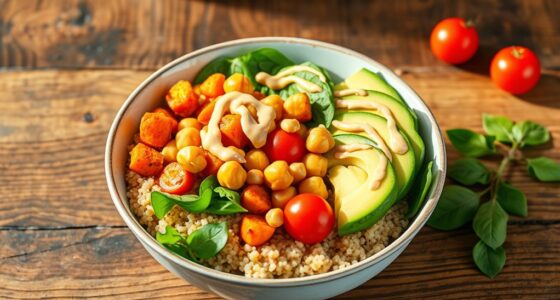
Culinary upcycling lets you turn kitchen scraps like vegetable peels, stale bread, and overripe fruit into tasty, creative dishes. By making homemade stocks, flavored spirits, croutons, or jams, you save money and cut down waste at the same time. This eco-friendly approach promotes smarter, more sustainable cooking habits. Keep exploring for inspiring recipes and tips that show how to make the most of every ingredient and minimize your waste.
Key Takeaways
- Use vegetable peels and trimmings to make homemade stocks and broths for soups and stews.
- Transform stale bread into croutons, breadcrumbs, or bread pudding to prevent waste.
- Infuse spirits or teas with citrus zest, apple skins, or other fruit peels for unique flavors.
- Create jams and flavored syrups from overripe fruits and fruit scraps.
- Dry citrus peels and fruit skins to add natural flavor to baked goods and beverages.
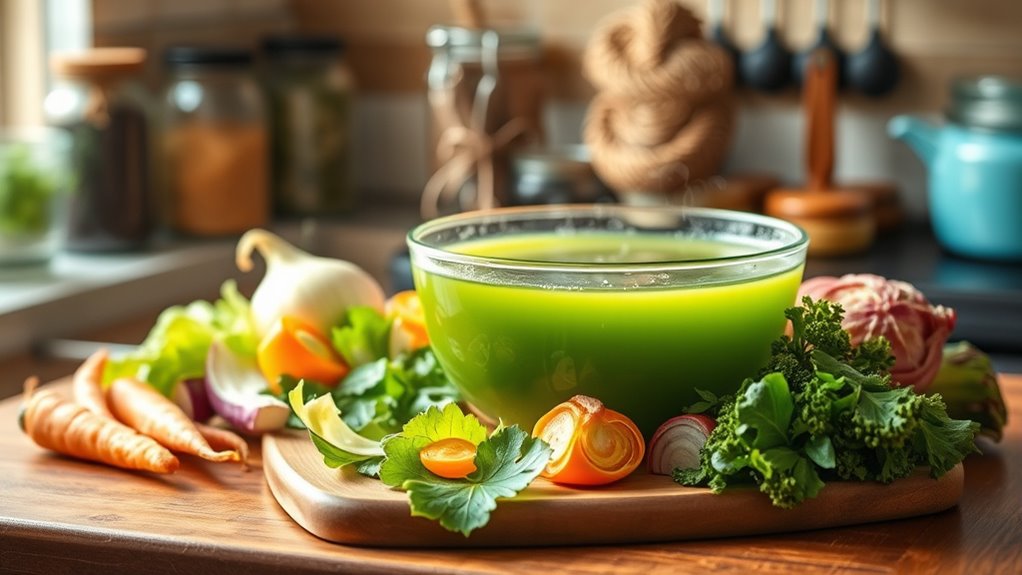
Culinary upcycling is transforming everyday food scraps and leftovers into delicious, value-added dishes, helping you reduce waste and save money. When you practice food waste reduction through upcycling, you not only minimize the amount of trash headed to landfills but also contribute to sustainable cooking. Instead of tossing those vegetable peels or bread ends, you learn to see their potential, turning what might seem useless into flavorful ingredients. This approach promotes mindful consumption and supports eco-friendly habits, making your kitchen a more sustainable space.
You can start by repurposing vegetable scraps—carrot tops, onion peels, and celery leaves—into flavorful broths or stocks. These scraps contain nutrients and deep flavors that add richness to soups and stews. A simple tip is to keep a bag or container in your freezer for kitchen scraps; when it’s full, simmer them into a homemade stock. Not only does this reduce waste, but it also provides a cost-effective way to boost your cooking. Similarly, bread ends and stale bread can be turned into croutons, bread pudding, or breadcrumbs, giving them a second life rather than throwing them away.
Save vegetable scraps in the freezer to create flavorful homemade stocks.
Fruit peels, such as citrus zest or apple skins, can be dried and used to flavor teas, baked goods, or homemade candies. You might also infuse spirits with peels or create homemade jams from overripe fruit. These small transformations highlight how resourcefulness can lead to delightful culinary creations. By utilizing every part of your produce, you cut down on unnecessary waste and make your meals more sustainable. Plus, you get to experiment with flavors and textures that you might not have considered before.
When you incorporate food waste reduction into your routine, your kitchen becomes a hub of creativity and eco-consciousness. For instance, vegetable trimmings can be blended into smoothies or added to compost, which benefits your garden and reduces landfill contributions. Using kitchen scraps helps you become more attentive to portion sizes and leftovers, preventing excess food from ending up in the trash. Over time, these habits can grow into a sustainable cooking routine that saves money and reduces your environmental footprint.
Additionally, understanding economic growth factors can inspire you to explore affordable and sustainable ingredients that support your budget and the environment. Ultimately, culinary upcycling is about making smarter choices and seeing potential in everyday scraps. It’s a practical way to embrace sustainable cooking, turning waste into worthwhile dishes. As you experiment with different recipes, you’ll discover that reducing food waste doesn’t mean sacrificing flavor—it often leads to more interesting, inventive meals that are better for your wallet and the planet.
Frequently Asked Questions
How Long Do Kitchen Scrap-Based Dishes Last in the Fridge?
Kitchen scrap-based dishes typically last 3 to 4 days in the fridge if you follow proper food preservation and storage tips. To keep them fresh, store leftovers in airtight containers and label them with dates. Always check for signs of spoilage before eating, like off smells or mold. Proper storage helps prevent bacteria growth, ensuring your creative recipes stay safe and delicious for those few days.
Are There Safety Concerns With Using Certain Scraps?
You should be cautious with certain scraps to guarantee food safety and prevent spoilage. Avoid using spoiled or moldy leftovers, as they can cause foodborne illnesses. Always inspect your scraps for signs of spoilage, like bad odors or sliminess. Properly store scraps in airtight containers and refrigerate promptly. Staying mindful of these safety tips helps prevent spoilage and keeps your upcycled dishes safe and delicious.
Can Upcycled Recipes Be Vegan or Gluten-Free?
Absolutely, you can make upcycled recipes vegan or gluten-free—because who doesn’t want to turn scraps into plant-based alternatives or gluten-free substitutions? Just swap out animal products for vegan options and use gluten-free grains or flours. It’s easy, eco-friendly, and delicious. So, go ahead—get creative with those kitchen scraps, and craft meals that are kind to both the planet and your dietary needs!
What Are Budget-Friendly Ingredients for Upcycling?
You can find budget-friendly ingredients for upcycling in your pantry staples and seasonal produce. Use items like rice, beans, pasta, and canned vegetables to stretch your budget. Incorporate seasonal fruits and veggies that are often cheaper and more flavorful. By combining pantry staples with fresh, seasonal scraps, you create tasty, cost-effective recipes that reduce waste and maximize your ingredients’ value.
How Do I Reduce Food Waste Beyond Recipes?
Think of your kitchen as a garden of abundance—you can nurture it to prevent food waste. Beyond creative recipes, focus on food waste prevention by planning meals and storing leftovers properly. Embrace composting methods to turn scraps into nourishing soil, closing the cycle of sustainability. This approach transforms waste into value, showing respect for resources, and fostering a mindful relationship with food that benefits both your home and the planet.
Conclusion
By now, you see how easy it is to turn kitchen scraps into delicious, waste-reducing meals. Every peel, stem, or crust becomes an opportunity to create something new and flavorful. Imagine the impact if everyone embraced culinary upcycling—less waste, more taste. Isn’t it satisfying to know that your leftovers can tell a story of creativity and sustainability? So, next time you cook, ask yourself: what hidden treasure can I transform today?