To get perfectly fluffy pancakes, you need to understand how leavening agents work. They produce carbon dioxide gas that creates bubbles, making the batter rise and become airy. Proper gluten development traps these gases, giving structure without toughness. Be careful not to overmix, which can overdevelop gluten and make pancakes dense. Controlling the temperature and timing enhances gas retention and expansion. Want to discover more about these science secrets for ideal pancakes? Keep exploring!

Get garden gear delivered free — and shop member deals
- Fast, free delivery on millions of items
- Access to Prime Big Deal Days deals on October 6–7
- Prime Video, Amazon Music and more included
Key Takeaways
- Leavening agents like baking powder and baking soda produce carbon dioxide gas, creating bubbles that make pancakes fluffy.
- Proper mixing avoids overdeveloping gluten, which can lead to dense, tough pancakes.
- Incorporating acids such as buttermilk enhances leavening reactions, boosting rise and fluffiness.
- Maintaining optimal pan temperature helps trap gases and ensures even rising and browning.
- Minimal stirring after combining ingredients preserves gas bubbles and the batter’s ability to expand during cooking.
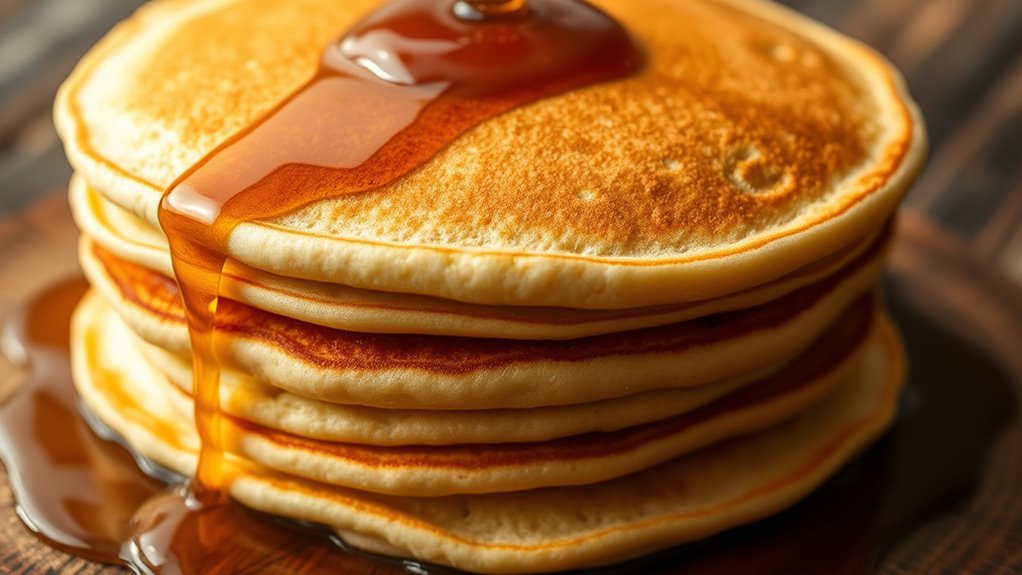
Ever wondered what makes pancakes so irresistibly fluffy? The secret lies in the chemistry happening right in your mixing bowl. When you combine your ingredients, two key factors come into play: leavening agents and gluten development. These elements work together to give your pancakes that airy, tender texture that everyone loves.
Leavening agents are the stars of the show. They produce the gases—mainly carbon dioxide—that create bubbles in the batter, which expand during cooking. Baking powder and baking soda are the most common leavening agents used in pancake recipes. Baking powder contains both an acid and a base, so it reacts with moisture and heat to release carbon dioxide. Baking soda, on the other hand, needs an acid, like buttermilk or yogurt, to activate. When you add these to your batter, you’re essentially creating a mini chemical reaction that produces bubbles, making your pancakes rise and turn fluffy. The timing matters too—mix just enough to combine the ingredients without overworking the batter, which can cause the leavening gases to escape prematurely, resulting in dense pancakes.
Leavening agents like baking powder and baking soda create bubbles that make pancakes rise and stay fluffy.
Now, let’s talk about gluten development. Gluten is a protein formed when wheat flour interacts with liquid and is mixed or stirred. In pancake batter, gluten provides structure and strength. When you stir, gluten strands form and develop, giving the batter a certain elasticity. This elasticity is vital because it traps the carbon dioxide gas released by the leavening agents. Proper gluten development creates a delicate network that holds these bubbles, allowing the pancakes to expand and stay fluffy during cooking. However, overmixing the batter can lead to excessive gluten development, resulting in tougher, chewier pancakes. To strike the right balance, stir just until the dry ingredients are incorporated, and avoid overmixing once you see the batter coming together.
In addition to leavening agents and gluten development, other factors influence pancake fluffiness. For instance, using buttermilk or adding a splash of vinegar can enhance leavening reactions, giving you even lighter pancakes. Also, ensuring your griddle or pan is properly heated helps the pancakes rise quickly and develop a golden crust without deflating. Temperature control is another important aspect that can significantly affect the final texture of your pancakes.
Understanding this chemistry behind leavening and gluten development empowers you to tweak your recipe for perfect pancakes every time. By controlling these processes—adding the right leavening agents, mixing just enough to develop gluten without overdoing it—you can consistently achieve that ideal, fluffy texture that makes pancakes a breakfast favorite.
As an affiliate, we earn on qualifying purchases.
Frequently Asked Questions
How Does Altitude Affect Pancake Fluffiness?
At higher altitudes, air pressure decreases, which affects how your pancakes rise. You might notice your batter becomes less dense, making it harder for pancakes to stay fluffy. To counter this, you can add a bit more leavening and slightly reduce liquid ingredients. By adjusting your batter density and understanding the impact of altitude, you’ll create perfectly fluffy pancakes no matter where you are.
Can Using Alternative Flours Change the Chemistry?
Using alternative flours definitely changes the chemistry of your pancakes. Different flours affect gluten development, which influences texture and structure. For example, almond flour has little gluten, so you might need more leavening agents to help your pancakes rise and stay fluffy. By adjusting leavening agents and understanding gluten development, you can successfully create delicious pancakes with alternative flours that match your desired fluffiness.
What Role Do Enzymes Play in Pancake Rising?
Did you know that enzyme activity can substantially impact batter aeration? Enzymes like amylase break down starches into sugars, which helps produce carbon dioxide during fermentation. This process enhances pancake rising, creating a lighter, fluffier texture. When enzymes are active, they improve the batter’s ability to trap air bubbles, leading to better rise. Controlling enzyme activity is key to achieving those perfectly fluffy pancakes you crave.
How Does Refrigeration Impact Batter Chemistry?
Refrigeration slows down batter fermentation, giving the yeast and bacteria more time to produce gases that make your pancakes fluffy. It also reduces sugar crystallization, helping prevent a gritty texture. When you chill the batter, enzymes become less active, allowing the gluten to relax, resulting in a tender pancake. So, refrigerating your batter improves texture and rise, making your pancakes irresistibly fluffy and light.
Are There Chemical Differences in Gluten-Free Pancakes?
You might notice gluten-free pancakes have a different feel, and that’s because their structure relies on alternative binders like eggs or xanthan gum, not gluten. This impacts batter binding, making it more delicate and prone to crumbling. The absence of gluten means the chemical bonds that give traditional pancakes elasticity are missing, so you need to carefully choose ingredients to mimic that classic, fluffy texture and keep your pancakes perfectly intact.
As an affiliate, we earn on qualifying purchases.
Conclusion
Now that you understand the chemistry behind fluffy pancakes, think of each ingredient as a brushstroke in a masterpiece. When combined just right, they create a canvas of airy, golden perfection. The baking soda acts as a spark of life, lifting your batter to new heights. So, next time you flip that pancake, remember you’re orchestrating a delicate dance of science and art—transforming simple ingredients into a symbol of warmth and comfort that brings everyone together.
As an affiliate, we earn on qualifying purchases.
As an affiliate, we earn on qualifying purchases.
Halloween Picks
halloween
As an affiliate, we earn on qualifying purchases.