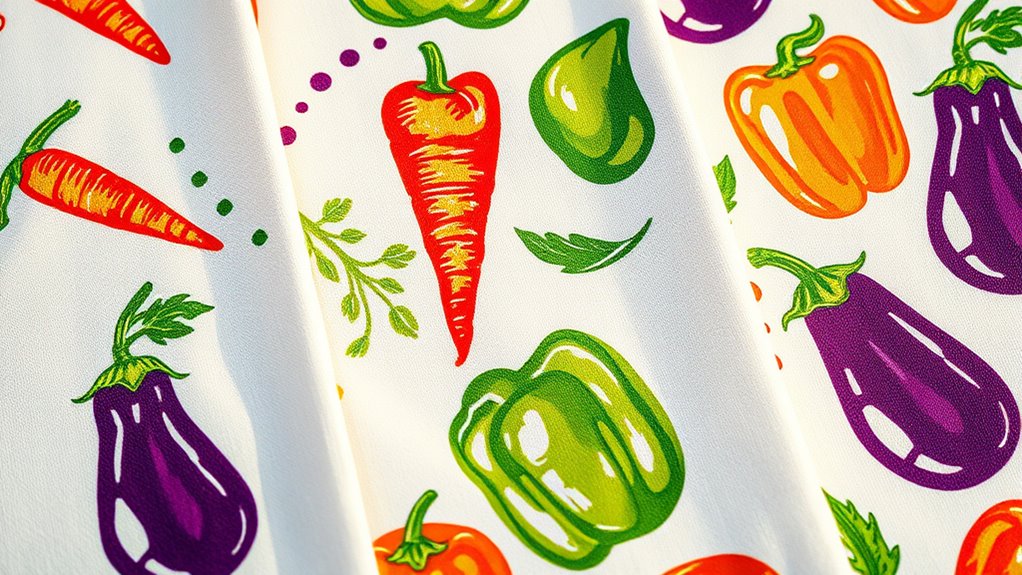

To create hand-printed tea towels with vegetables as stamps, start by choosing firm, smooth vegetables like potatoes or carrots. Carve or cut them into your desired shapes, then apply fabric-safe ink or dye. Press firmly onto the fabric to guarantee clear, vibrant prints. For lasting results, use gentle washing methods and consider fixing the dyes. Want tips to improve your designs and ensure they last? Keep exploring to learn more.
Key Takeaways
- Choose firm, smooth vegetables like potatoes or carrots and carve or slice them into desired stamp shapes or patterns.
- Use fabric-safe ink or natural dyes, applying with a sponge or brush, then press firmly onto the tea towel for clear prints.
- Test dye application and stamping techniques on scrap fabric to achieve consistent, vibrant results before final printing.
- Hand-wash printed tea towels with gentle, pH-neutral soap to preserve the natural dyes and stamped designs.
- Consider heat-setting or using fixatives to enhance dye longevity and ensure the prints stay vibrant through multiple washes.
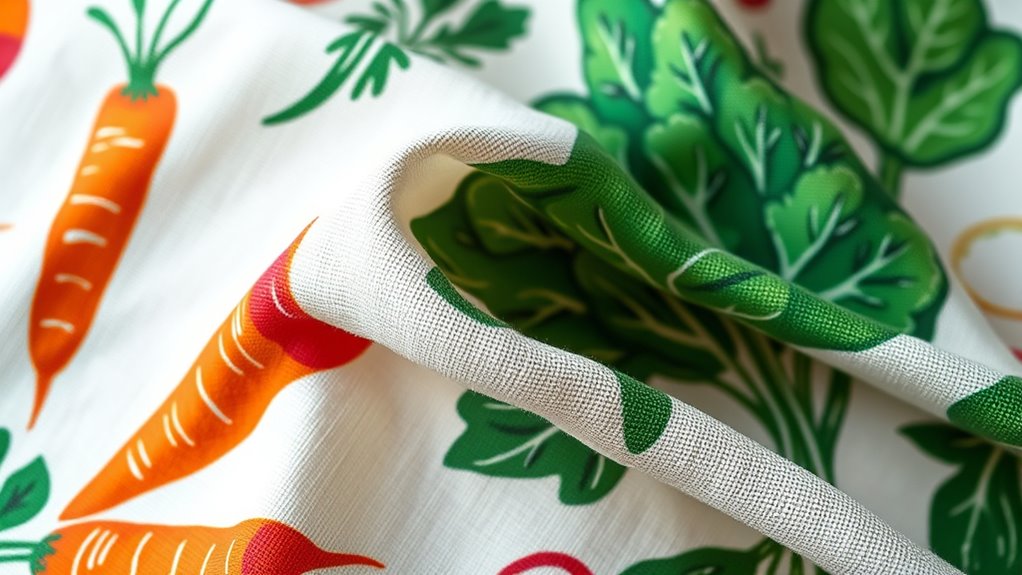
Using vegetables as stamps is a fun and eco-friendly way to create unique, hand-printed tea towels. This craft allows you to explore different dyeing techniques, turning simple produce into artistic tools that add charm and personality to your textiles. When you start, choose fresh, firm vegetables like potatoes, carrots, or celery. These work well because their surfaces hold ink or dye easily, giving you clear, bold patterns. To prepare your vegetable stamps, slice or carve them into the shapes you want, making sure the surfaces are smooth and even. You can also experiment with carving intricate designs or simple shapes to match your aesthetic. Once your stamps are ready, select fabric-safe ink, fabric paint, or natural dye solutions suitable for textiles. Applying these dyes correctly is vital to achieve crisp, vibrant prints. You might dip the vegetable stamp directly into the dye or use a sponge or brush to apply the color, depending on the effect you desire. Remember, pressing firmly and evenly guarantees consistent impressions and sharp edges. As you work, pay attention to the fabric care aspect—hand-washing your tea towels after printing helps preserve the designs. Avoid harsh detergents or bleach, which can fade or damage the printed motifs. Instead, opt for gentle, pH-neutral soap and cold water to maintain the integrity of your artwork. If you’re using natural dyes derived from vegetables, keep in mind that these may fade over time, especially with frequent washing. To prolong the vibrancy, consider setting the dye with heat—either by ironing the towels once dry or using a fixative recommended for natural dyes. This step helps lock in the color and makes your tea towels more durable. When washing your hand-printed towels, do so separately at first to prevent bleeding onto other fabrics. Over time, you’ll find that proper care extends the life of your designs, keeping them looking fresh and vibrant. The key to successful vegetable stamping lies in experimenting with different dyeing techniques and understanding fabric care. Whether you’re using simple water-based fabric paints or more complex natural dyes, always test on scrap fabric first. This way, you can adjust your pressure, dye concentration, and drying methods to get the best results. Additionally, understanding fiber-reactive dyes and how they bond with textiles can help you achieve more vibrant and long-lasting prints. With patience and creativity, your hand-printed tea towels will become cherished items, showcasing both your artistic flair and eco-conscious approach.
Frequently Asked Questions
Can Vegetable Stamps Be Reused for Multiple Designs?
You can reuse vegetable stamps for multiple designs, especially if you clean them carefully between uses. Using natural dye alternatives and eco-friendly stamping techniques, you can create diverse patterns without waste. Just guarantee your vegetables are firm and well-preserved, and avoid over-squeezing to prevent damage. Reusing stamps not only saves money but also supports sustainable art practices, making your projects eco-friendly while allowing you to experiment with different designs effortlessly.
Which Vegetables Produce the Most Detailed Prints?
Imagine transforming your craft with the right vegetable carving. You’ll find that intricate vegetables like potatoes, zucchinis, and carrots produce the most detailed prints, thanks to their textures and shapes. For best results, consider ink durability, ensuring your designs stay vibrant. These vegetables offer fine lines and complex patterns, making your stamped designs stand out beautifully. With the right technique, your vegetable stamps will impress every time, turning simple veggies into artful masterpieces.
How Do You Prevent Colors From Bleeding on Fabric?
To prevent colors from bleeding on fabric, you should focus on fabric dyeing techniques and proper color fixation. First, make certain you use high-quality, fabric-safe ink or dye designed for textiles. Before stamping, fix the color by letting it dry completely and heat-setting with an iron if needed. Always wash and dry your fabric after dyeing to set the colors further, ensuring your vegetable stamps produce crisp, long-lasting prints without bleeding.
Are Vegetable Stamps Safe for Children to Use?
When considering if vegetable stamps are safe for children, you should prioritize food safety and child safety. Use non-toxic, washable paints to guarantee they’re safe for kids to handle. Always supervise children during craft activities, and wash vegetables thoroughly beforehand. Avoid using vegetables with pesticides or sharp edges. With these precautions, vegetable stamping can be a fun and safe activity that promotes creativity without risking health or safety.
How Long Do Hand-Printed Tea Towels Last?
You wonder how long your hand-printed tea towels last. With proper fabric care, they can remain vibrant for years. To extend their lifespan, avoid harsh detergents and wash gently. After use, clean your stamps thoroughly to prevent residue buildup, which can affect print quality. Keep in mind that frequent washing and care will help preserve the design and fabric, ensuring your beautiful, functional towels stay in great condition longer.
Conclusion
So, next time you use a vegetable as a stamp, remember—you’re turning something ordinary into art. Who knew that a simple carrot or potato could transform your kitchen linens into unique masterpieces? It’s funny how the most mundane items can become your most creative tools. So go ahead, get messy with produce, and proudly display your vegetable-stamped tea towels—because nothing says “artsy” like turning a veggie into your new favorite decor.