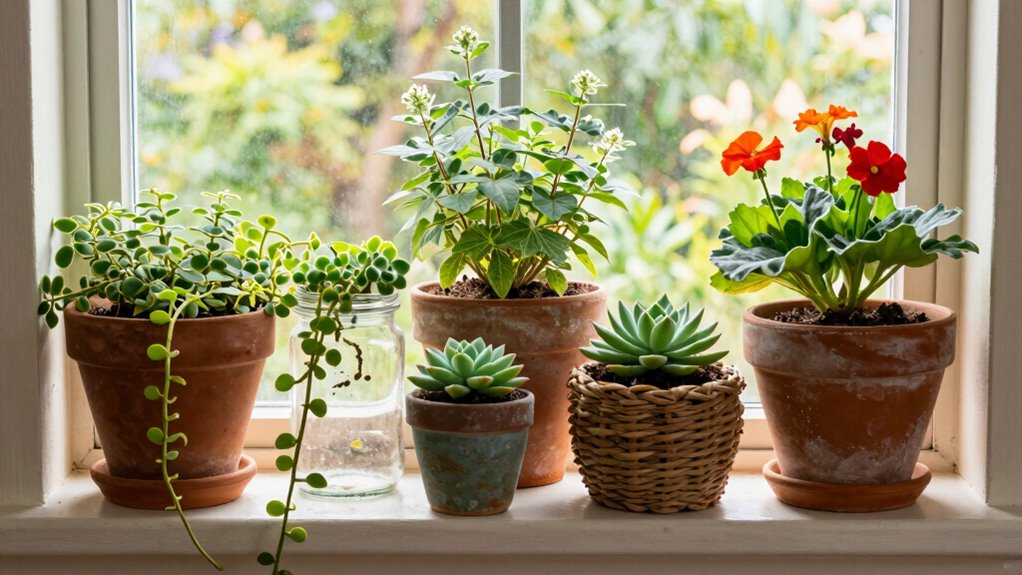

To upgrade your windowsills and corners, create personalized DIY planters using repurposed items like teacups, tins, or wooden crates. Choose containers suited to your plants’ needs, ensuring proper drainage, and select lightweight materials to make placement easy. Arrange your plants thoughtfully for ideal sunlight and space, and incorporate vertical or tiered setups to maximize space. Keep your garden thriving with regular watering, pruning, and sustainable practices. If you keep exploring, you’ll discover more inspiring ideas to create vibrant, custom green spaces.

Get garden gear delivered free with Prime
- Fast, free delivery on millions of items
- Prime Video, Amazon Music and more included
- Member-only deals all year
Key Takeaways
- Utilize vertical or tiered planters to maximize limited window or corner space effectively.
- Incorporate repurposed containers like teacups or crates for a personalized, eco-friendly touch.
- Choose lightweight, stylish materials that complement your decor and allow easy placement.
- Arrange plants with varied heights and textures for visual interest in small areas.
- Ensure proper drainage and sunlight exposure to maintain healthy, thriving plants in confined spaces.
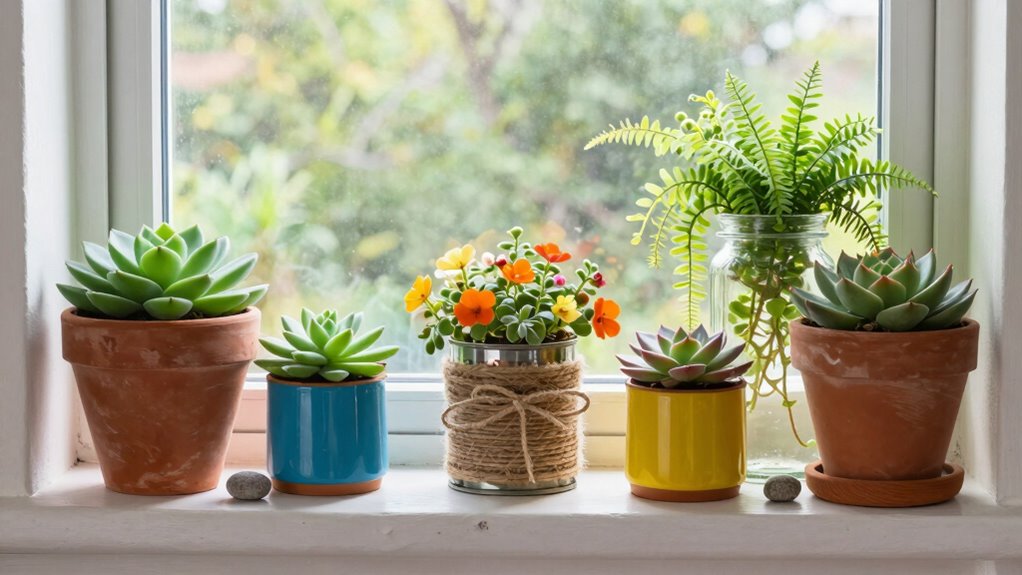
Creating your own planters can be a fun and rewarding way to add a personal touch to your gardening space. When you DIY, you control every detail, from choosing the right container to ensuring your plants thrive. Plant care becomes easier because you can select containers that suit your plant’s specific needs, whether it’s proper drainage or size. Container selection is essential; pick pots that match your plants’ growth habits and the space’s aesthetic. For windowsills and corners, lightweight materials like ceramic, wood, or plastic work well, making placement easier and reducing strain on shelves or ledges.
Start by considering the types of plants you want to grow. Small succulents, trailing vines, or flowering herbs all have different needs. Once you’ve decided, choose containers that accommodate their root systems comfortably. For example, succulents prefer well-draining pots with drainage holes, while herbs might need slightly larger containers to grow healthy and lush. When selecting containers, think about the overall look you want—vintage, modern, rustic—and pick colors and shapes that complement your decor. You can repurpose items like teacups, tin cans, or wooden crates, giving new life to old objects while adding a creative flair.
Plant care is key to successful DIY planters. Make sure you use quality potting soil suitable for your plant type, and don’t forget to add a layer of gravel or stones at the bottom of the container for extra drainage. Water your plants carefully, especially in containers that dry out quickly, like terracotta or porous ceramic. Regularly check for signs of overwatering or underwatering, and adjust your watering schedule accordingly. Fertilize occasionally to keep your plants vibrant, and prune dead or yellowing leaves to promote healthy growth. Additionally, understanding air circulation can help prevent issues like mold or pests, especially in enclosed or densely planted areas. Considering watering techniques can also improve plant health, ensuring your plants receive the right amount of moisture without overdoing it. Incorporating sustainable practices can further enhance your gardening efforts and reduce environmental impact.
To improve your setup, consider researching plant placement to optimize sunlight exposure, which is crucial for healthy growth. When upgrading windowsills and corners, think vertically. Use stackable planters or hanging baskets to maximize space and add visual interest. You can even create a small herb garden right on your windowsill, making fresh herbs easily accessible for cooking. For corners, consider tiered plant stands or corner shelves to display multiple plants without cluttering the space. Experiment with different containers and arrangements until you find a layout that feels balanced and lively.
Ultimately, DIY planters give you the freedom to customize your gardening space fully. With thoughtful container selection and attentive plant care, you’ll transform even the smallest windowsill or corner into a thriving green oasis that reflects your personality. Incorporating knowledge of plant needs can help guide your choices for a healthier garden.
Products Worth Considering

Dyson V8 Cyclone Cordless Vacuum

Ring Alarm 14-Piece Wireless Security System Kit

Bose TV Speaker (2nd Gen) Compact Soundbar with Bluetooth and HDMI Connectivity
As an affiliate, we earn on qualifying purchases.
Frequently Asked Questions
What Are the Best Plants for Low-Light Windowsills?
You should choose shade-tolerant plants for your low-light windowsills, as they thrive in minimal sunlight. Consider options like snake plants, pothos, or ZZ plants—they’re excellent low light greenery and require little maintenance. These plants adapt well to darker spots, adding lushness without needing direct sun. With proper care, they’ll brighten up your space and make your windowsill a vibrant, green corner even in the dimmest light.
How Do I Prevent Overwatering in Small Planters?
Don’t let your small planters turn into a drowning pool—overwatering is a common pitfall. To prevent this, guarantee your soil drainage is excellent by using well-draining soil and pots with drainage holes. Stick to a consistent watering schedule, checking the soil’s moisture level first. When in doubt, it’s better to underwater slightly than to overdo it, as dry soil is happier than waterlogged roots.
Which Materials Are Most Durable for Outdoor Corner Planters?
For outdoor corner planters, you want materials with great material longevity and weatherproofing options. Concrete and stone are highly durable, resisting weather changes and UV rays, making them ideal. Teak or cedar wood also work well if properly sealed, offering natural beauty and weather resistance. Avoid softer woods that may rot quickly. By choosing materials with proven longevity and applying suitable weatherproofing, your planters stay attractive and functional longer.
How Often Should I Fertilize My Indoor Planters?
You should fertilize your indoor planters every 4 to 6 weeks to maintain proper indoor plant nutrition. During the growing season, a balanced, water-soluble fertilizer works best, providing essential nutrients. In winter, cut back on fertilizing since plant growth slows. Stick to your fertilizer schedule, and you’ll keep your plants healthy and vibrant year-round. Remember, over-fertilizing can harm your plants, so always follow the recommended dosage.
Can I Create Self-Watering Planters at Home?
Yes, you can create self-watering planters at home. Use simple self-watering systems, like a water reservoir with a wick or a plastic bottle with a wick to supply moisture gradually. Follow DIY watering tips, such as ensuring proper drainage and positioning the wick correctly. These projects help maintain consistent moisture, reduce overwatering, and keep your plants healthy, making your gardening routine easier and more efficient.
Conclusion
With these DIY planter projects, you’re transforming your windowsills and corners into vibrant, lively spaces. Think of it like planting seeds of creativity—soon, your home will flourish with greenery and personality. I once added a small corner planter to my own space, and it became the go-to spot for relaxing, a tiny oasis that grew into a personal sanctuary. Start today, and watch your home bloom with life and charm, one project at a time.