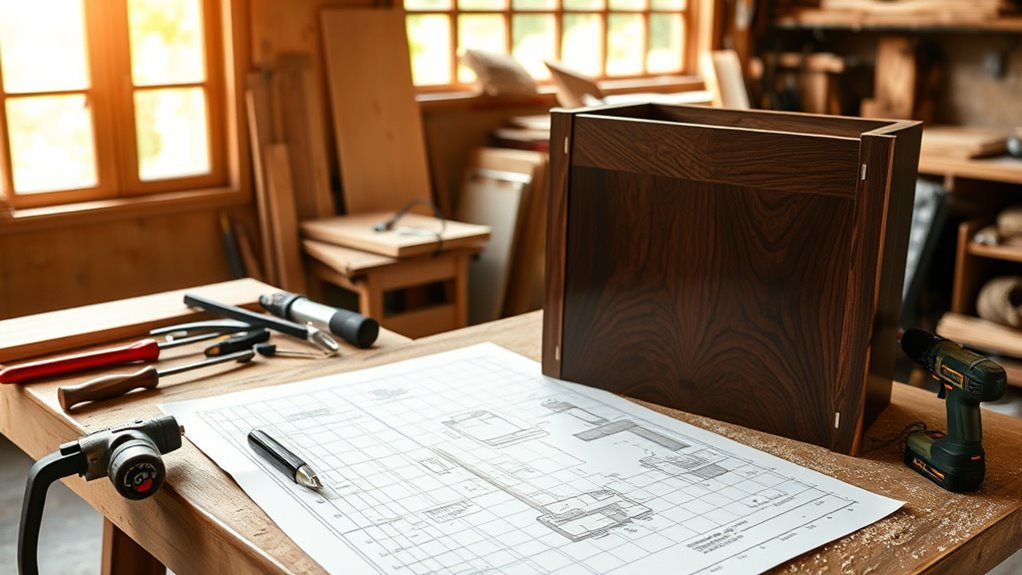

To build custom furniture, start by carefully selecting your materials based on your design, budget, and durability needs, choosing from options like hardwoods or softwoods. Next, plan your construction steps and gather the right tools. Focus on proper surface preparation, then apply finishes such as stain, oil, or varnish to protect and enhance your piece. Paying attention to material choice and finishing techniques will make sure your furniture looks great and lasts long—continue to explore for detailed guidance.
Key Takeaways
- Determine your design goals and select appropriate materials based on durability, aesthetics, and budget.
- Plan and create detailed sketches or plans to guide construction and material cutting.
- Prepare materials thoroughly with sanding and test finishes before assembly.
- Assemble furniture carefully, ensuring proper support and weight distribution.
- Apply suitable finishes, such as stain or paint, to protect surfaces and achieve the desired look.
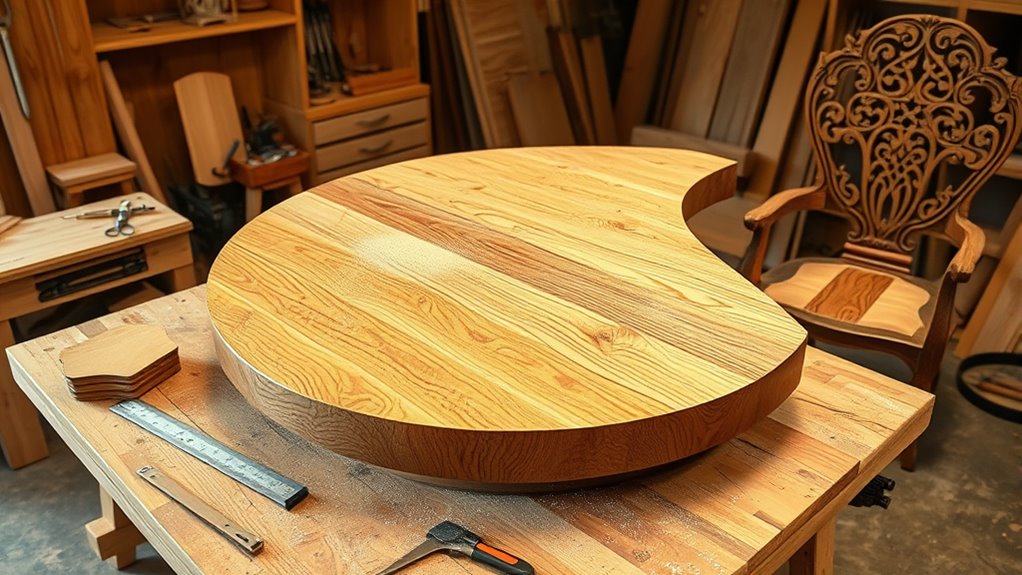
Building custom furniture allows you to create pieces that perfectly fit your space, style, and needs. When you start this process, the choices you make regarding material selection and finishing techniques will substantially influence the final look and durability of your furniture. Carefully selecting the right materials ensures your piece is both functional and aesthetically pleasing, while choosing the appropriate finishing techniques enhances its appearance and protects it over time.
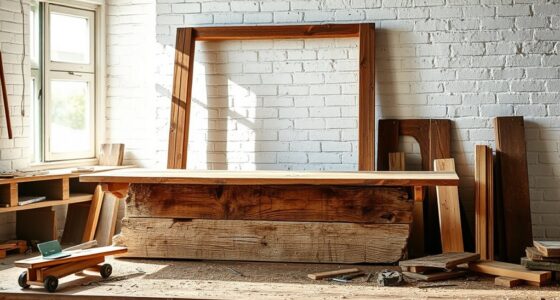
Material selection is one of the most vital steps in building custom furniture. You want to choose wood, metal, or other materials that suit your design goals and lifestyle. For instance, hardwoods like oak, maple, or walnut are excellent for sturdy, long-lasting pieces, but they can be more expensive. Softwoods like pine or cedar are more affordable and easier to work with, making them ideal for beginners. Consider the environment where the furniture will be placed—if it’s going in a humid area, certain woods or finishes might be better suited to withstand moisture. Additionally, think about the weight and weight distribution of the materials, especially if the furniture needs to support significant weight or be portable. The right choice of material also affects the finishing techniques you’ll use later, as some woods take stain or paint differently, impacting the overall look you want to achieve.
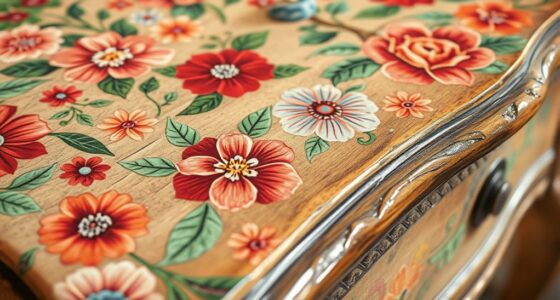
Once you’ve selected your materials, the next step is to focus on finishing techniques. Your choice of finish not only enhances the visual appeal but also protects the surface from damage, wear, and environmental factors. For example, if you desire a smooth, glossy surface, you might opt for a high-quality polyurethane or lacquer, which provides a durable, shiny finish. If you prefer a more natural look, oil or wax finishes can bring out the wood’s grain and warmth, giving your piece a rustic, organic feel. Sanding your wood thoroughly before applying any finish is essential to achieve a sleek, professional appearance. You may also consider staining the wood before sealing it to add color or depth, but always test your stain on a scrap piece first. Properly applying these finishes with the right tools and techniques ensures an even coat, reduces imperfections, and enhances the durability of your furniture.
Frequently Asked Questions
What Tools Are Essential for Beginner Furniture Builders?
To start building furniture, you need essential power tools like a drill, jigsaw, and sander, along with reliable hand tools such as a tape measure, square, and screwdrivers. Power tools make cuts and assembly faster, while hand tools give you control for precise work. With these basics, you’ll be well-equipped to create sturdy, custom pieces. Don’t forget safety gear to protect yourself during the process.
How Do I Choose the Right Wood for My Project?
Choosing the right wood is like finding the perfect melody for your project’s symphony. Focus on the wood grain, aligning it with your design to create visual harmony, and consider wood durability to guarantee your piece stands the test of time. Opt for hardwoods like oak or maple for strength, or softer woods like pine for ease of work. Trust your intuition, and let the wood’s character guide your decision.
What Safety Precautions Should I Follow During Construction?
You should prioritize tool safety by always reading the manufacturer’s instructions and inspecting tools before use. Wear protective gear like safety glasses, ear protection, and dust masks to prevent injuries. Keep your workspace clean and well-lit, and never operate power tools when you’re tired or distracted. Follow safety guidelines strictly, and unplug tools when not in use. Staying vigilant helps guarantee a safe, enjoyable furniture-building experience.
How Can I Customize Furniture to Fit Small Spaces?
Imagine squeezing a compact bookshelf into a cozy corner—your furniture should do the same. You can customize furniture for small spaces by incorporating space-saving designs like fold-away beds or wall-mounted desks. Opt for modular furniture that adapts to your needs, allowing pieces to shift or stack when necessary. This approach maximizes every inch, creating a functional, stylish environment without clutter.
What Are Common Mistakes to Avoid in Building Furniture?
You should avoid common design mistakes, like choosing a style that clashes with your space, and measurement errors that lead to ill-fitting furniture. Always double-check your measurements before cutting or assembling. Don’t rush the planning stage, and make certain your design is practical for your small space. By paying close attention to detail and avoiding these pitfalls, you’ll create functional, beautiful furniture that fits perfectly.
Conclusion
Building custom furniture allows you to create unique pieces tailored to your space and style. With patience and the right tools, you’ll find it rewarding and cost-effective. Did you know that the furniture industry is expected to reach $1.5 trillion globally by 2025? So, why not join the movement and craft your own pieces? Start small, stay consistent, and enjoy the process—you’ll be amazed at what you can achieve with a little effort and creativity.