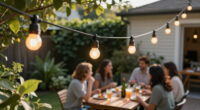
Choosing outdoor string lights is less about whether either type can brighten a patio and more about which compromises you want to live with: lower running costs and longer bulb life, or the classic look and often cheaper initial purchase of incandescent lighting. LEDs are the practical default for lights that will stay up or be used frequently. Incandescents still make sense when their particular warm glow matters most, the lights will be used occasionally, or you already own compatible strings.

Get garden gear delivered free with Prime
- Fast, free delivery on millions of items
- Prime Video, Amazon Music and more included
- Member-only deals all year

Tenmiro 200FT Outdoor String Lights with 60 Shatterproof S11 Edison Bulbs
- ✔ Length: 200 ft
- ✔ Bulbs: 60 S11 Edison bulbs plus 2 spares
- ✔ Color temperature: 2700K warm white

100 ft Outdoor LED String Lights with Remote, Dimmable ST38 Bulbs
- ✔ Length: 100 ft (30 m)
- ✔ Bulbs: 37 ST38 LED bulbs plus 2 spares
- ✔ Bulb base: E12

BYGUQ 100-Foot Outdoor String Lights with Remote and Dimmable S14 LED Bulbs
- ✔ Length: 100 ft
- ✔ Maximum connectable length: Up to 200 ft with the same model
- ✔ Bulb type and base: S14 LED; E12 base
This comparison focuses on LED and incandescent outdoor string lights across cost, light quality, durability, heat, control, and upkeep. Product details vary: check whether a set is rated for outdoor use, what replacement bulbs it accepts, and whether it is approved for the way you plan to install it. Choose LED for regular use and lower ongoing expense; choose incandescent for a traditional appearance on a limited budget, provided you accept more frequent replacement and higher electricity use.
At a Glance
| Criteria | LED outdoor string lights | Incandescent outdoor string lights | Winner |
|---|---|---|---|
| Upfront and running cost | Often costs more to buy; generally uses less electricity over time. | Often cheaper initially; higher electricity use can raise long-term cost. | Depends |
| Light appearance | Many warm-white styles are available; color and appearance vary by bulb. | Recognizable warm glow; appearance is familiar and consistent. | B |
| Energy use | Usually lower for comparable light output. | Usually higher for comparable light output. | A |
| Lifespan and durability | Typically lasts longer, though quality and outdoor exposure matter. | Bulbs generally need replacement sooner; weather and handling affect lifespan. | A |
| Heat and safety | Runs cooler than incandescent bulbs. | Bulbs get hot during use. | A |
| Dimming and controls | Many models support dimmers or smart controls, but compatibility must be checked. | Some dimmable models are available; check bulb, string, and dimmer compatibility. | Depends |
| Maintenance and replacement | Less frequent replacement; integrated LED sets can be harder to repair. | Replaceable bulbs are common, but replacements may be needed more often. | Depends |
Tenmiro 200FT Outdoor String Lights with 60 Shatterproof S11 Edison Bulbs
When the main challenge is covering a broad outdoor space, Tenmiro’s 200-foot length gives it the clearest advantage in this group. Its 60 warm-white S11 Edison bulbs are intended for patios, decks, and gardens, and the extra reach can simplify a layout that would otherwise require joining multiple shorter strings. Compared with either 100-foot remote-controlled option, this is the more direct choice for a large area where coverage matters more than lighting adjustments.The compromise is fewer stated ways to tailor the atmosphere. The lights emit a fixed 2700K warm white, and the supplied details do not list a remote, dimming, modes, or a timer. That makes them less adaptable than the ST38 and BYGUQ sets when we want to shift between a gentle evening glow and brighter task lighting. Their shatterproof plastic construction favors durability over a glass-bulb feel. Tenmiro includes two spares and specifies a 365-day warranty, useful practical details, though the product information does not provide an IP rating to compare directly with the IP65 claims on the other two picks.We would choose Tenmiro for a large, fairly consistent lighting plan, not for buyers who want extensive control or a specific certified ingress rating. Its role is about long-run coverage with fewer connections, rather than the most customizable ambience.
Pros:
- 200-foot length is suited to broad outdoor layouts.
- Includes 60 shatterproof S11 bulbs and two spares.
- Warm 2700K light creates a consistent evening atmosphere.
- A 365-day warranty is specified.
Cons:
- No dimming, remote, modes, or timer are listed.
- Plastic bulbs may not have the look or feel of glass.
- The supplied specifications do not identify an IP rating or bulb base.
Best for: Buyers lighting a large patio, deck, or garden who want a 200-foot run and are comfortable with a fixed warm-white setting.
Not ideal for: Anyone who wants remote dimming, lighting modes, a timer, glass bulbs, or an explicitly stated IP rating.
Bottom line: For broad areas where one long, steady warm-white run is the priority, Tenmiro offers the strongest coverage advantage over the two 100-foot alternatives.
“For broad areas where one long, steady warm-white run is the priority, Tenmiro offers the strongest coverage advantage over the two 100-foot alternatives.”
100 ft Outdoor LED String Lights with Remote, Dimmable ST38 Bulbs
For a typical 100-foot patio or garden run, this set makes the most balanced choice when control is as important as coverage. Its remote offers four brightness levels, three lighting modes, and 3- or 5-hour timer settings, giving us more ways to tune the lights than Tenmiro’s fixed-output 200-foot set. The 2700K warm-white color keeps the look consistent, while the dimming levels make the output adjustable without changing the stated color temperature.The listing specifies 37 shatterproof ST38 LED bulbs plus two spares, with PET construction, built-in hanging hooks, and IP65 protection. Those details make it a compelling fit for a smaller, controlled installation, particularly when weather exposure and impact-resistant bulbs are priorities. Compared with BYGUQ, it offers a clearly named ST38 bulb shape and a detailed remote feature set, but BYGUQ is the one explicitly described as connectable with the same model up to 200 feet. Buyers planning to extend their setup should therefore compare that option before choosing this one.We should also account for the replacement requirement: the bulbs use an E12 base, so replacements need to match. The supplied description does not specify a warranty, and the 100-foot length will not match Tenmiro’s reach for very large areas. This is our best overall pick for buyers who want a well-specified control package, rather than the longest possible string.
Pros:
- Remote provides four brightness levels, three modes, and two timer choices.
- IP65 rating and impact-resistant PET bulbs suit outdoor placement.
- Includes 37 bulbs, two spares, and built-in hanging hooks.
- Warm 2700K light suits relaxed patio and garden settings.
Cons:
- Replacement bulbs must use an E12 base.
- The supplied product information does not specify a warranty.
- At 100 feet, it provides less coverage than Tenmiro’s 200-foot set.
Best for: Patio and garden owners seeking a 100-foot string with remote dimming, timer settings, lighting modes, and specified IP65 protection.
Not ideal for: Buyers covering a very large area in one run, those who want to extend beyond 100 feet, or anyone unwilling to check E12 replacement compatibility.
Bottom line: For buyers who want a manageable 100-foot outdoor run with clearly specified remote controls and IP65 protection, this is the most balanced option.
“For buyers who want a manageable 100-foot outdoor run with clearly specified remote controls and IP65 protection, this is the most balanced option.”
BYGUQ 100-Foot Outdoor String Lights with Remote and Dimmable S14 LED Bulbs
BYGUQ occupies useful middle ground: it starts at 100 feet, like the ST38 set, but is specifically described as connectable with the same model up to 200 feet. That makes it appealing for buyers who want to begin with a shorter layout and leave room to extend later. We should be precise about what this means: the connection feature does not say that a second 100-foot string is included. Tenmiro provides 200 feet in its stated set length, while BYGUQ offers an expandable route using compatible matching lights.Its controls are a strong point. The remote supports four brightness levels, three modes, and 3- or 5-hour timers, closely matching the ST38 option. BYGUQ’s warm-yellow 2500K light is slightly warmer by specification than the other products’ 2700K output, so it may suit shoppers who prefer a more amber-toned ambience. The listing also specifies IP65 protection, shatterproof PET bulbs, and built-in hooks, giving it a solid outdoor-use feature set without winning on stated coverage out of the box.There are practical qualifications. These lights require corded electric power, and the product information notes that bulbs may need extra tightening to make contact. Like the ST38 set, it uses E12 bases; unlike that option, it explicitly states a maximum connected length and a 24-volt supply. We would select BYGUQ when expansion is central to the plan, but favor the ST38 set when we want a comparable control package without that specific setup consideration.
Pros:
- Can connect with the same model up to 200 feet.
- Remote offers four brightness levels, three modes, and timer settings.
- IP65 rating and shatterproof PET bulbs are specified.
- 2500K warm-yellow output offers a warmer listed color temperature than the other picks.
Cons:
- Requires corded electric power.
- Bulbs may need extra tightening to make contact.
- Maximum connected length does not mean a second string is included.
Best for: Buyers who want a 100-foot starting setup, remote-controlled lighting, and the option to connect matching BYGUQ lights up to 200 feet.
Not ideal for: Anyone who needs 200 feet included in one purchase, wants battery-powered lights, or prefers not to troubleshoot bulb contact by tightening bulbs.
Bottom line: Choose BYGUQ over the otherwise similar ST38 set when future expansion to a longer matching run is more important than a simple one-string setup.
“Choose BYGUQ over the otherwise similar ST38 set when future expansion to a longer matching run is more important than a simple one-string setup.”
As an Amazon Associate we earn from qualifying purchases.
Key Differences
The biggest practical difference shows up with repeated use. A set used for several hours most evenings can consume substantially more electricity if it uses incandescent bulbs, and those bulbs generally need replacing sooner. LEDs cost more upfront in many product lines, but frequent use gives their lower energy use and longer expected lifespan more time to offset that premium. For occasional gatherings, the savings may be too small to matter, making a less expensive incandescent set a reasonable choice.
Appearance is more nuanced than “LEDs are cold, incandescents are warm.” Warm-white LEDs can produce a cozy patio effect, but color temperature, lens shape, and brightness differ between models. Incandescents offer the traditional glow many people recognize, at the cost of bulbs that run hot. In either case, outdoor suitability, secure mounting, and appropriate electrical connections matter more than the bulb technology alone. The best purchase is the one that suits the setting and use pattern, not simply the type with the lowest shelf price.
Detailed Comparison
Upfront and running cost (major difference)
Winner: Depends; this is a use-pattern decision. Incandescent strings often cost less at checkout, which helps when decorating a rental patio, setting up for a short event, or buying several strings on a tight budget. LEDs commonly carry a higher purchase price, but they use less electricity and tend to need fewer replacements. For lights used regularly across multiple seasons, that can make LEDs the better total-cost choice. For a few evenings each year, the initial price may matter more than modest energy savings. Compare actual wattage and bulb-replacement costs rather than assuming every LED set is a bargain or every incandescent set is cheap to own.
Light appearance (Incandescent outdoor string lights wins — moderate)
Winner: Incandescent, by a modest margin for traditional ambiance. Incandescent bulbs deliver the familiar warm glow that many people want over a dining area or garden seating. LEDs can also look warm and inviting, but the effect depends on the specific color temperature, bulb shape, and diffuser. Some LED sets may appear sharper or less even to someone accustomed to traditional bulbs. If appearance is the deciding factor, compare lit product samples or verified images and look for warm-white LEDs rather than judging by “LED” alone. Incandescents have the more predictable classic look; LEDs offer a broader range of styles.
Energy use (LED outdoor string lights wins — major)
Winner: LED, a major advantage for frequent use. LEDs generally use much less electricity than incandescent bulbs for similar light output. The difference matters most when strings are long, several sets are connected, or lights run for many hours each week. A household that switches them on only for occasional dinners may see little impact on its bill, but nightly patio lighting makes the efficiency gap more relevant. Check the product’s stated wattage and follow its limits for connecting strings; bulb technology does not override the electrical rating of the set.
Lifespan and durability (LED outdoor string lights wins — moderate)
Winner: LED, generally. LED bulbs typically last longer than incandescent bulbs, reducing how often a high or awkwardly mounted string needs attention. This is particularly useful on pergolas, rooflines, or large patios where replacing individual lamps is inconvenient. That advantage does not mean an LED string is immune to failure: connectors, wiring, seals, and weather exposure can determine how long the whole product lasts. Some sets use integrated LEDs that are difficult to repair if a section fails. Incandescent strings more often use replaceable bulbs, but expect bulb changes to be part of ownership.
Heat and safety (LED outdoor string lights wins — moderate)
Winner: LED. LEDs produce less heat at the bulb than incandescent lights, making them a more comfortable choice near fabric, foliage, or areas where people may brush past the string. Incandescent bulbs become hot during operation, so keep them clear of combustible materials and avoid handling them while lit or still hot. Neither type is automatically safe for every outdoor setup. Use a string specifically rated for outdoor conditions, inspect cords and sockets, keep connections protected as the manufacturer directs, and avoid exceeding the listed load or connection limit.
Dimming and controls (minor difference)
Winner: Depends on the exact set. Both technologies are sold in dimmable versions, but a dimmer or smart plug is not automatically compatible with every string. LED models can flicker, fail to dim smoothly, or behave unpredictably with an incompatible controller. Incandescent bulbs are often straightforward to dim when the string and dimmer are designed for it, though product specifications still govern. If ambience control is important, verify compatibility before purchase and favor products that clearly list supported dimmers, smart features, or remote controls. For simple on-and-off operation, this distinction is minor.
Maintenance and replacement (moderate difference)
Winner: Depends on repairability versus replacement frequency. Incandescent sets often make it easy to replace a burned-out bulb, and standard sockets can be convenient when compatible spares are readily available. The tradeoff is that bulbs may need changing more often. LEDs usually reduce routine bulb replacement, but an integrated LED string can be difficult to fix if a lamp or internal component fails. Before buying, check whether bulbs are replaceable, whether replacements are included or sold separately, and whether the manufacturer provides repair guidance. For a permanent installation, repairable construction may matter as much as bulb life.
LED outdoor string lights: Pros and Cons
Pros:
- Lower electricity use, especially helpful for frequent or long runtimes.
- Longer expected bulb life means less routine replacement.
- Runs cooler than incandescent lighting.
- Available in warm-white styles as well as other colors and designs.
Cons:
- Often costs more upfront.
- Light quality varies; some products may not match the traditional incandescent glow.
- Integrated LED designs can be difficult to repair if a section fails.
- Dimming and smart-control compatibility must be checked.
Incandescent outdoor string lights: Pros and Cons
Pros:
- Often lower initial purchase cost.
- Classic warm glow many buyers prefer for patio ambiance.
- Replaceable bulbs are common on many string styles.
- Can suit occasional use where energy savings would take a long time to offset the price difference.
Cons:
- Uses more electricity than comparable LED lighting.
- Bulbs generally need replacement sooner.
- Bulbs run hot, requiring more care around nearby materials and during handling.
- Long-term cost can rise with frequent use and repeated bulb purchases.
Who Should Choose What
Choose LED outdoor string lights if:
- You expect to leave the lights on regularly or for long periods.
- The strings will be mounted somewhere inconvenient to reach for frequent bulb changes.
- Lower energy use and cooler operation matter more than the lowest initial price.
- You want a modern set with a choice of warm-white, colored, or smart-control features, after checking compatibility.
Choose Incandescent outdoor string lights if:
- You strongly prefer the familiar incandescent appearance and have confirmed the specific bulbs suit your space.
- You will use the lights occasionally, so a lower purchase price matters more than long-run efficiency.
- You already own compatible incandescent strings or replacement bulbs.
- You want a string with individually replaceable bulbs and accept more frequent maintenance.
Skip both if: Skip ordinary plug-in string lights if the installation site lacks a suitable outdoor-rated power source or the mounting plan would expose cords and connections to conditions the product is not rated to handle. Look for a properly rated alternative and follow local electrical guidance.
Value for Money
Paying more for LEDs is usually worthwhile when the lights will see regular use, especially across several seasons. Lower electricity use and fewer expected bulb changes can offset a higher purchase price, while cooler operation adds a practical benefit around seating and decorative materials. The exact payback depends on the price gap, wattage, runtime, and local electricity rates, so a premium LED set is not automatically the best value. Compare those details rather than relying on the technology label alone.
Incandescents can be the better value for occasional use, a one-off event, or a buyer who puts a high value on the traditional glow and accepts the operating cost. If you use them most nights, their lower shelf price can be misleading: higher power use and replacement bulbs add expenses over time. For a typical homeowner planning to keep patio lights up and use them often, choose a reasonably priced outdoor-rated LED set. Pay extra for premium controls or construction only when those features solve a real need.
Final Verdict
For most people installing outdoor string lights for regular patio use, LED is the stronger choice: it uses less electricity, runs cooler, and usually calls for fewer bulb changes. Choose a warm-white model if you want a relaxed, traditional feel, and check the outdoor rating, replacement policy, and control compatibility before buying. The main reason to choose incandescent is a firm preference for its familiar glow or a genuinely occasional-use setup where low upfront cost is the priority.
The deciding factor is how often the lights will be on. If they will illuminate your outdoor space week after week, buy LED and treat a higher initial price as a reasonable investment in lower running costs and less maintenance. If they will come out for a handful of evenings and you prefer the classic look, incandescent remains a sensible choice. Do not pay extra for smart features you will not use, and do not buy either type without confirming it is suited to your outdoor installation.
Frequently Asked Questions
Are LED outdoor string lights worth the higher price?
Usually, if you use them often or leave them on for long periods. Lower electricity use and fewer expected bulb changes can make up for a higher initial cost over time. For rare use, the savings may not justify paying much more upfront.
Do LED string lights look as warm as incandescent lights?
They can, but the result varies by product. Look for warm-white LEDs and check the color temperature, bulb shape, and lit appearance. Incandescents remain the more familiar choice for a classic warm glow.
Can outdoor string lights stay outside all year?
Only if the manufacturer rates the specific set and its connections for the conditions where it will be installed. An outdoor rating does not mean every plug or connection can be left exposed. Follow the product’s storage and installation instructions, and inspect cords before use.
Which type is better for a dimmer or smart plug?
Neither type wins across all products. Check that the string is marked as dimmable and that the dimmer or smart controller is compatible. LEDs are more likely to show problems with an incompatible dimmer, while incandescent sets also have stated electrical limits.