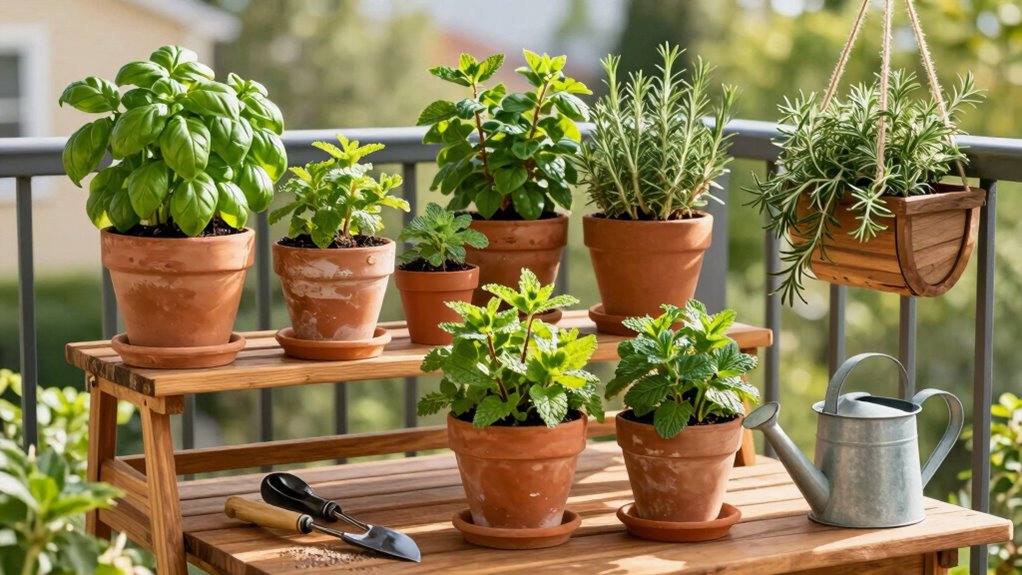

To start a balcony herb garden you’ll actually use, choose containers with drainage holes and make sure they fit your space and style. Place them where they’ll get at least 4-6 hours of sunlight daily, adding grow lights if needed. Water regularly, but don’t overdo it—know each herb’s preference. Prune and harvest often to keep herbs healthy and encourage growth. With consistent care and experimenting, you’ll create a garden that’s both enjoyable and practical—discover more tips as you plan your perfect balcony oasis.
Key Takeaways
- Choose appropriately sized containers with drainage for easy care and healthy root growth.
- Position containers to ensure 4-6 hours of direct sunlight daily or use grow lights indoors.
- Water consistently based on herb preferences, and fertilize every few weeks for optimal growth.
- Regularly prune, harvest, and inspect for pests to encourage continuous, healthy foliage.
- Develop a simple, enjoyable routine to maintain your herbs and experiment with different varieties.
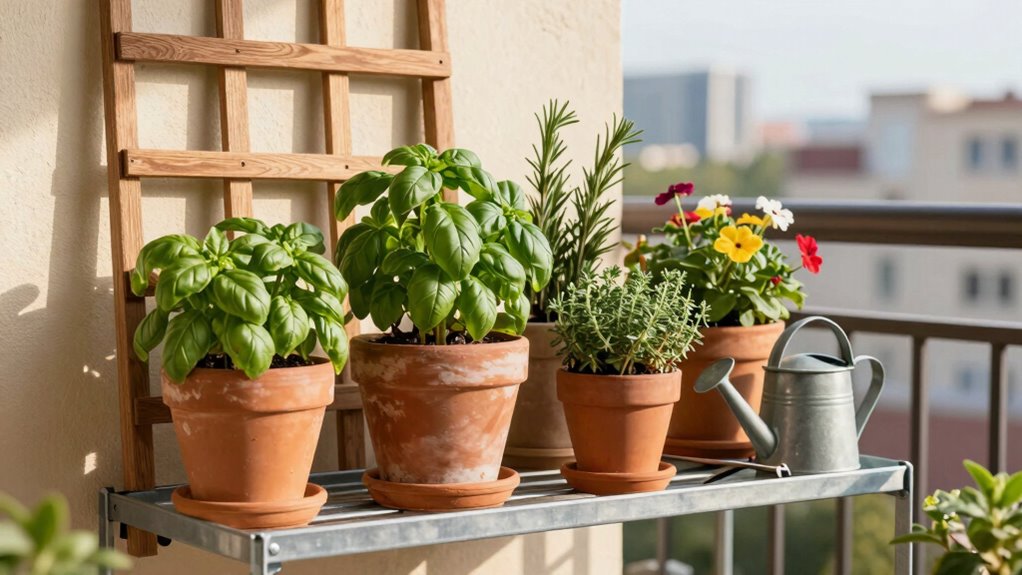
Starting a balcony herb garden is a rewarding way to bring fresh flavors and greenery into your daily life, even if you have limited space. The key to success begins with understanding plant care and choosing the right containers. When selecting containers, opt for options with drainage holes to prevent water from pooling, which can lead to root rot. Consider the size and material of your containers; larger pots give herbs room to grow and tend to retain moisture better, while lighter materials like plastic or resin are easier to move around. Terracotta offers excellent breathability but dries out quickly, so you’ll need to water more frequently. Whichever you choose, make sure your containers fit your balcony’s space and your aesthetic preferences.
Choose containers with drainage holes, appropriate size, and materials that suit your space and aesthetic preferences.
Once you’ve picked your containers, focus on plant care. Different herbs have varying needs, but most thrive with plenty of sunlight—aim for at least 4-6 hours of direct sun daily. Position your containers accordingly, and if sunlight is limited, consider using grow lights to supplement. Regular watering is essential, especially during hot weather; keep the soil moist but not soggy, and check daily in the summer to prevent dehydration. Herbs like basil, parsley, and cilantro prefer consistently moist soil, while others such as rosemary and thyme prefer slightly drier conditions. Fertilize your herbs every few weeks with a balanced, water-soluble fertilizer to promote healthy growth, but avoid overfeeding, which can lead to lush foliage but diminished flavor. Remember that plant care involves more than just watering and fertilizing; it also includes monitoring for pests and disease.
Pay attention to airflow and humidity, as these factors influence plant health. Good air circulation helps prevent disease and keeps your herbs vigorous. Prune your herbs regularly to encourage new growth and prevent them from becoming leggy or overcrowded. Harvest frequently, but always leave enough foliage for the plant to recover and continue thriving. Additionally, understanding the importance of container selection can significantly impact your gardening success, as different materials and sizes affect moisture retention and plant health. Be mindful of pests; check your plants often, and use natural remedies or organic pesticides if necessary.
Balcony herb gardening is about creating a manageable, enjoyable routine. You don’t need a large space or complicated setup—just the right containers, attentive plant care, and consistent maintenance. With these simple steps, your balcony can become a lush, fragrant herb haven that provides fresh ingredients for your cooking, right outside your door. Keep experimenting with different herbs and container arrangements, and you’ll find your balcony herb garden becomes a cherished part of your daily life.
balcony herb garden containers with drainage holes
As an affiliate, we earn on qualifying purchases.
As an affiliate, we earn on qualifying purchases.
Frequently Asked Questions
Can I Grow Herbs Indoors on a Balcony?
Yes, you can grow herbs indoors on your balcony. Make sure you provide adequate indoor lighting, like near a sunny window or with grow lights, to keep your herbs healthy. Choose containers with proper drainage and the right size for your herbs’ root systems. Regular watering and good soil are essential. With these steps, your indoor balcony herb garden will thrive, giving you fresh herbs year-round.
How Do I Prevent Pests in My Balcony Herb Garden?
Think of your balcony herb garden as a peaceful haven, where pests are uninvited guests. To keep them at bay, use companion planting—pair herbs like basil with tomatoes for natural pest repellents. Incorporate natural repellents, such as neem oil or garlic spray, to deter pests without chemicals. Regularly inspect your plants and remove any pests early, ensuring your garden remains healthy, vibrant, and pest-free.
What Are the Best Herbs for Small Balconies?
For small balconies, easy herbs like basil, mint, chives, and parsley work well. Choose herb containers that fit your space and drainage needs, such as compact pots or window boxes. Consider your balcony’s sunlight requirements—if it gets full sun, go for sun-loving herbs like basil and thyme. If sunlight is limited, opt for shade-tolerant herbs like mint and parsley. This way, you’ll have fresh herbs within reach and suited to your space.
How Often Should I Water My Balcony Herbs?
Even if you’re worried about overwatering, sticking to a consistent herb watering schedule is key. Typically, you’ll need to water your balcony herbs every 2-3 days, but this depends on the weather, pot size, and herb type. During hot or windy days, increase frequency. For proper balcony herb maintenance, check the soil’s dryness by touch; if it feels dry, it’s time to water. This keeps your herbs healthy and thriving.
Do Herbs Need Special Soil or Fertilizer?
Herbs do need special soil, often a well-draining, nutrient-rich mix designed for containers. Use herb soil that provides good aeration and moisture retention. As for fertilizer needs, herbs benefit from regular feeding with a balanced, water-soluble fertilizer every few weeks during the growing season. Avoid over-fertilizing; too much can lead to lush foliage but flavor loss. Keep an eye on your herbs to adjust feeding as needed.
As an affiliate, we earn on qualifying purchases.
Conclusion
So, go ahead and start that balcony herb garden—you’ll be amazed at how easy it is to grow your own fresh herbs. Just remember, with all the effort you’ll put in, you might find yourself actually using those herbs more often than you thought. Ironically, the very act of cultivating your garden could turn you into a culinary expert, making store-bought herbs seem almost unnecessary. Who knew that a little balcony effort could transform your cooking and your day?
herb garden fertilizer for containers
As an affiliate, we earn on qualifying purchases.
As an affiliate, we earn on qualifying purchases.
As an affiliate, we earn on qualifying purchases.