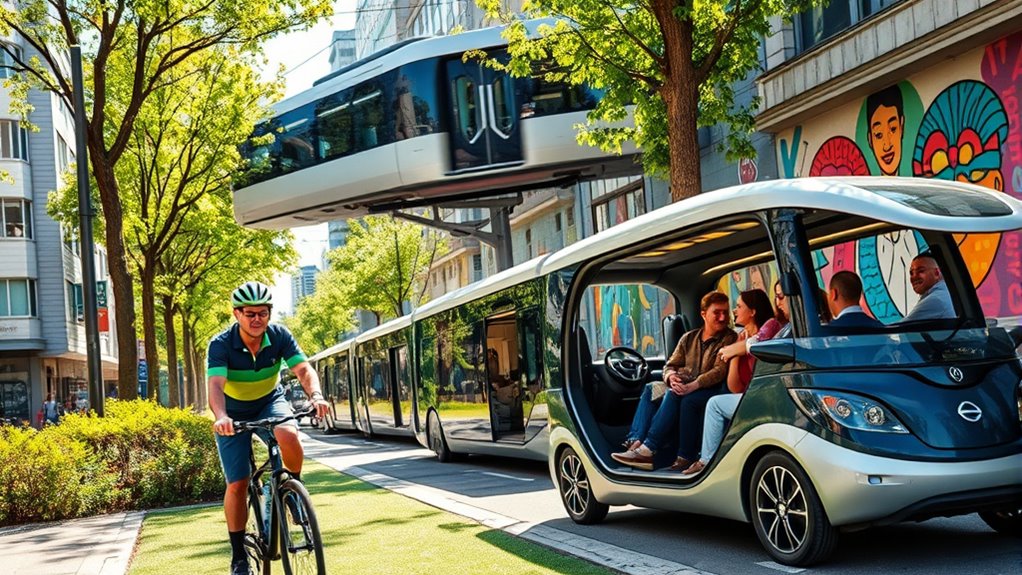

Switching to green transportation options like cycling, carpooling, and public transit can markedly cut urban pollution and your carbon footprint. Cycling is eco-friendly and promotes health, especially when supported by dedicated bike lanes and secure parking. Carpooling reduces the number of vehicles on the road, saving money and lowering emissions. Public transit offers a convenient way to commute while decreasing congestion. Keep exploring ways to make your travels more sustainable—you’ll find practical tips that can make a difference.
Key Takeaways
- Cycling, carpooling, and public transit significantly reduce urban pollution and carbon footprints.
- Dedicated infrastructure like bike lanes and transit hubs encourage eco-friendly transportation choices.
- Carpooling decreases vehicle numbers on roads, lowering emissions and transportation costs.
- Widespread adoption of public transit minimizes individual car use, easing congestion and pollution.
- Urban planning integrating these options enhances sustainable mobility and environmental benefits.
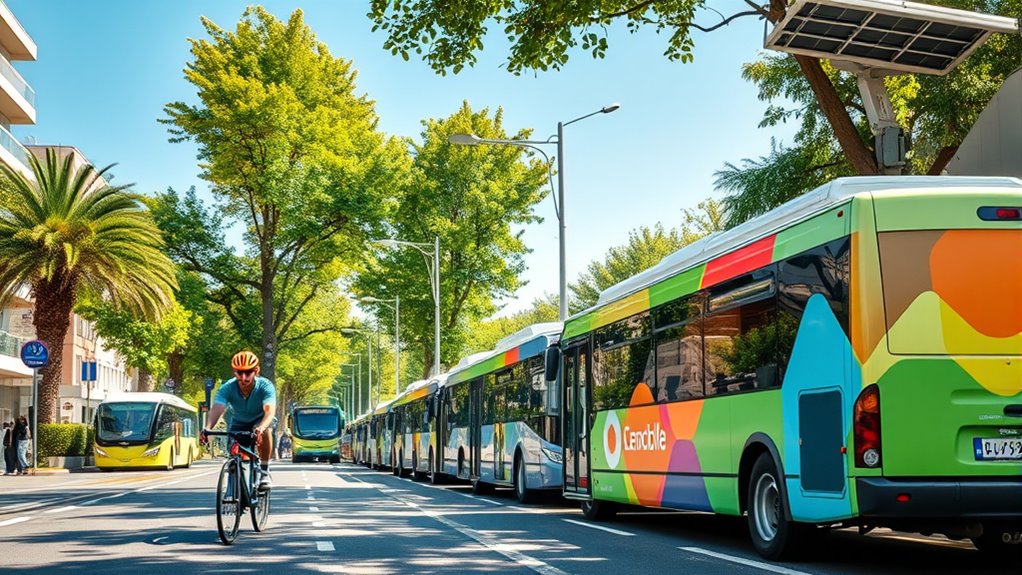
Have you ever wondered how transportation impacts our environment? It’s a question that’s become more urgent as cities grow and climate concerns intensify. One way to make a difference is by embracing green transportation options like cycling, carpooling, and public transit. These choices reduce pollution, lower carbon footprints, and help manage urban congestion. But to truly maximize their benefits, we need to understand how broader strategies like electric vehicle adoption and urban planning play a role.
Electric vehicles (EVs) are transforming the way we think about personal transportation. As more people adopt EVs, the reliance on fossil fuels diminishes, cutting down greenhouse gas emissions. However, widespread electric vehicle adoption isn’t just about the vehicles themselves; it’s also about how cities are designed. Urban planning becomes vital here. When urban areas are planned with EV charging stations, bike lanes, and accessible public transit hubs, it encourages people to choose cleaner options over traditional gasoline-powered cars. Thoughtful urban planning creates a seamless infrastructure that makes it easier and more appealing for residents to switch to eco-friendly transportation modes. This means cities that prioritize sustainable development see higher rates of electric vehicle adoption and a notable reduction in urban pollution.
Urban planning with EV stations and bike lanes encourages eco-friendly transportation choices.
Cycling is one of the simplest and most effective ways to lessen your environmental impact. When cities invest in dedicated bike lanes and secure parking, cycling becomes safer and more attractive. You can replace short car trips with bike rides, which produce no emissions and also promote personal health. Carpooling offers another practical solution, especially for commuting to work or school. Sharing rides reduces the number of vehicles on the road, cuts emissions, and saves you money. It’s a straightforward way to make your daily travel more sustainable without needing major lifestyle changes.
Public transit is often overlooked, but it’s one of the most efficient ways to move large numbers of people with a lower environmental impact. Buses, trains, and subways can carry hundreds of passengers simultaneously, greatly reducing the number of individual vehicles on the road. When public transit systems are well-funded and accessible, they encourage people to leave their cars behind. Furthermore, integrating transit options with urban planning efforts—like transit-oriented development—ensures that communities are designed around accessible transportation hubs, making it easier for you to choose buses or trains over driving. Additionally, advancements in projector technology demonstrate how innovative infrastructure can support sustainable urban environments.
In the end, transforming transportation habits isn’t just about switching modes; it’s about supporting systemic changes—like promoting electric vehicle adoption and smart urban planning—that make sustainable options more practical and appealing. By making informed choices and advocating for better infrastructure, you can contribute to cleaner, greener cities.

TST Electric Bike for Adults, 48V 15Ah Battery, 1500W Peak Motor, Fat Tire
- Powerful Motor: 750W motor with 1500W peak power
- Removable Battery: 48V 15Ah battery with quick charge
- Long Range: Up to 60 miles per full charge
As an affiliate, we earn on qualifying purchases.
As an affiliate, we earn on qualifying purchases.
Frequently Asked Questions
What Are the Health Benefits of Cycling Regularly?
Cycling regularly offers numerous health advantages, making it a fantastic choice for your well-being. You’ll improve cardiovascular fitness, strengthen muscles, and boost endurance. Cycling benefits also include better mental health, reduced stress, and increased energy levels. Plus, it helps manage weight and enhances joint mobility. By incorporating cycling into your routine, you actively promote a healthier lifestyle, enjoying both physical and mental benefits with each ride.
How Can Cities Encourage More Public Transit Usage?
Cities can boost public transit use by investing in smart ticketing systems that make fare payments quick and easy, encouraging more riders. Improving transit accessibility guarantees everyone can comfortably use the services, including those with mobility challenges. You can also promote awareness through campaigns highlighting convenience and environmental benefits. When transit feels accessible and hassle-free, you’re more likely to choose it over driving, helping reduce congestion and pollution.
What Are the Environmental Impacts of Carpooling?
Carpooling reduces your vehicle emissions by decreasing the number of cars on the road, which directly lowers greenhouse gases and air pollution. It also helps ease traffic congestion, making commutes smoother and shorter. By sharing rides, you contribute to a healthier environment and less traffic stress. This sustainable choice benefits everyone by cutting down on fossil fuel consumption and creating cleaner, more livable cities.
How Do Green Transportation Initiatives Affect Local Economies?
Imagine you’re in the midst of a 1920s city; green transportation initiatives boost local economies by enhancing urban infrastructure and creating jobs. You’ll notice increased economic growth as investments flow into sustainable transit systems, reducing congestion and pollution. This shift encourages local businesses, attracts tourists, and improves quality of life. By supporting green transit, you’re helping your community become more resilient, connected, and economically vibrant—just like a well-oiled, eco-friendly machine.
What Are the Best Safety Tips for Urban Cyclists?
To stay safe as an urban cyclist, prioritize urban safety by always wearing a helmet and using visible clothing or lights, especially at night. Keep your bike well-maintained to prevent accidents—check brakes, tires, and chains regularly. Stay alert, obey traffic laws, and use hand signals to communicate your intentions. Avoid blind spots, and stay predictable to guarantee a safer ride through busy city streets.

Everlane – The ReNew 15" Transit Backpack – Warm Charcoal One Size
- Transit-Ready Laptop Pocket: 15-inch exterior laptop compartment
- Organized Storage: Multiple zip, slip pockets, water bottle holders
- Travel-Friendly Features: Magnetic closure, pass-through strap for luggage
As an affiliate, we earn on qualifying purchases.
As an affiliate, we earn on qualifying purchases.
Conclusion
By choosing cycling, carpooling, or public transit, you help cut down pollution and protect our planet. Think of your efforts like planting seeds in a garden—you may be one person, but together, you can grow a thriving, healthy environment. Every small step you take makes a big difference, turning your daily commute into a powerful act of kindness for the Earth. So, hop on, share rides, or pedal away—your actions matter more than you realize.

Moblorg Small Center Console for Cars, Trucks, Minivans, SUVs, Vehicle Organizer, Cup Holders, Recycled Plastic, Made in USA (Black)
- Made in the USA from recycled plastics: Eco-friendly, high-quality materials
- Two multi-sized cup holders: Accommodates various cup sizes
- Fits on seat or floor: Versatile placement options
As an affiliate, we earn on qualifying purchases.
As an affiliate, we earn on qualifying purchases.

Safer.Bike ‑ Bicycle Safety Wing ‑ Roll-Out Snap Band ‑ Flexible Spacer
- Extended Safety Distance: 12-inch road extension for visibility
- Dual-Side Reflectivity: Reflective yellow foil on front and back
- Auto-Retraction Mechanism: Spring-steel core for quick roll-up
As an affiliate, we earn on qualifying purchases.
As an affiliate, we earn on qualifying purchases.